
Building a powerful and well-defined chest remains one of the top fitness goals for men in 2026. While traditional exercises like the bench press dominate most workout routines, the fly workout with dumbbells offers something unique that pressing movements simply cannot deliver. This isolation exercise targets your pectoral muscles with surgical precision, creating that full, rounded chest appearance that turns heads.
The dumbbell fly has been a cornerstone of bodybuilding and strength training for decades, and recent research in 2025 continues to validate its effectiveness for chest development. Whether you are brand new to lifting weights or have years of training experience under your belt, mastering this exercise can unlock new levels of chest growth and definition.
This comprehensive guide covers everything you need to know about the fly workout with dumbbells, from basic technique and common mistakes to advanced programming strategies and nutrition tips that support muscle growth. By the end of this article, you will have all the tools necessary to incorporate this powerful exercise into your training routine safely and effectively.
Understanding the Fly Workout with Dumbbells
The fly workout with dumbbells, also called the dumbbell chest fly or pec fly, stands out as one of the most effective isolation exercises for chest development. Unlike compound pressing movements that recruit multiple muscle groups, the fly specifically isolates your pectoralis major through a unique horizontal adduction movement pattern.
Think of the motion as wrapping your arms around something large, like giving a tree a big hug. Your arms move in a wide arc from an outstretched position to coming together above your chest. This movement pattern emphasizes the stretching and contracting functions of your chest muscles in ways that vertical pressing simply cannot replicate.
The exercise gained massive popularity in the golden era of bodybuilding during the mid-twentieth century. Legendary bodybuilders discovered that incorporating flys into their chest routines created superior muscle definition and that coveted full-chest look. Today, this exercise remains a staple in training programs for everyone from fitness beginners to professional athletes.
What makes the dumbbell fly especially valuable is its ability to maintain constant tension on your chest muscles throughout the movement. While pressing exercises involve significant tricep and shoulder activation, the fly keeps most of the workload concentrated in your pecs. This targeted approach makes it perfect for building both size and definition in your chest.
Muscles Targeted During Dumbbell Fly Exercise
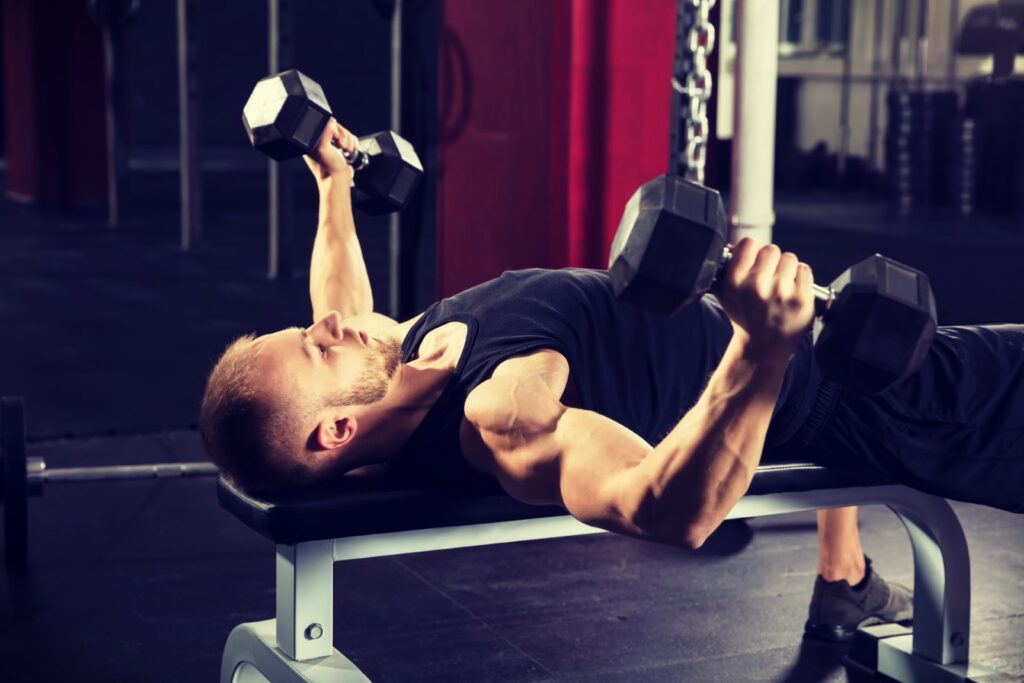
Understanding the specific muscles involved in the fly workout with dumbbells helps you execute the movement more effectively and build a stronger mind-muscle connection. Let me break down each muscle group that contributes to this exercise.
Your pectoralis major serves as the primary muscle working during every rep. This large, fan-shaped muscle covers most of your chest wall and consists of two distinct heads that you can target differently based on your bench angle. The sternal head forms the bulk of your mid and lower chest, while the clavicular head creates the upper chest shelf near your collarbone.
When you perform flat bench dumbbell flys, you emphasize the sternal head more heavily. This portion of your chest responds well to the deep stretch at the bottom of the movement and the strong contraction at the top. The result is improved chest thickness and that classic rounded appearance that many men pursue.
Your anterior deltoids, the front portions of your shoulder muscles, assist during the fly movement by helping guide your arms through the horizontal plane. However, when you maintain proper form with that crucial slight elbow bend, shoulder involvement stays minimal compared to pressing movements. This reduced shoulder activation means more work stays focused on your chest where you want it.
Several stabilizer muscles work behind the scenes to support proper execution. Your biceps contract isometrically to maintain your elbow position throughout each rep. Your core muscles, including your abdominals and lower back, engage to keep your body stable on the bench. Your scapular stabilizers, the muscles surrounding your shoulder blades, work hard to keep your shoulders in a safe, retracted position.
This comprehensive muscle recruitment pattern explains why the fly workout with dumbbells delivers such impressive results. Every rep challenges not just your chest but your entire upper body stabilization system, building functional strength that carries over to other exercises and real-world activities.
Step-by-Step Guide to Perfect Dumbbell Fly Technique
Executing the fly workout with dumbbells with perfect form is absolutely critical for maximizing results while protecting your shoulders from injury. Many lifters rush through this exercise or use poor technique, which limits their progress and creates unnecessary injury risk. Follow these detailed steps to master the movement.
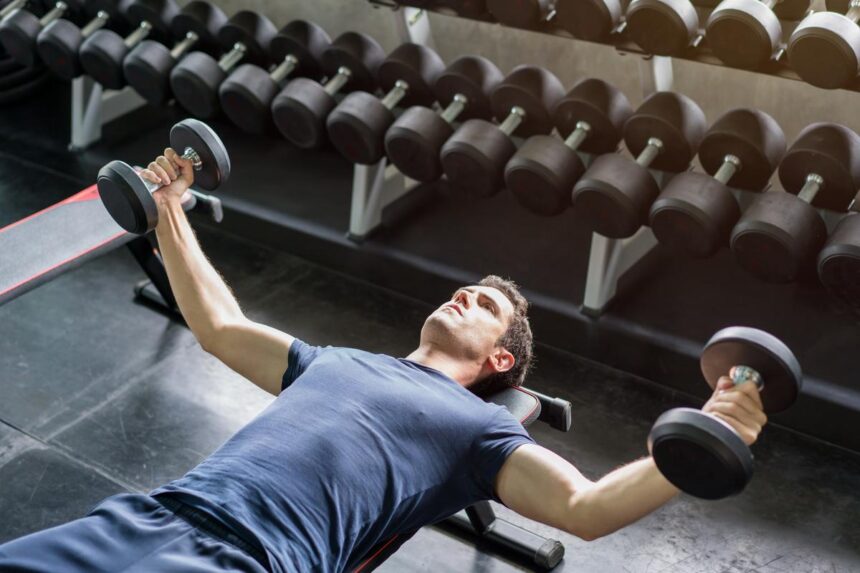
Begin by selecting an appropriate weight. Remember that lighter is better when starting out. Pick up your dumbbells from the floor using a neutral grip where your palms face inward toward each other. Position the ends of the dumbbells in your hip crease and sit down on your bench with good posture.
To get into the starting position safely, lie back on the bench while keeping the dumbbells close to your chest. This technique prevents excessive strain on your shoulders as you transition from seated to lying down. Plant your feet firmly and flat on the floor about shoulder-width apart. This stable base prevents unwanted movement during the exercise.
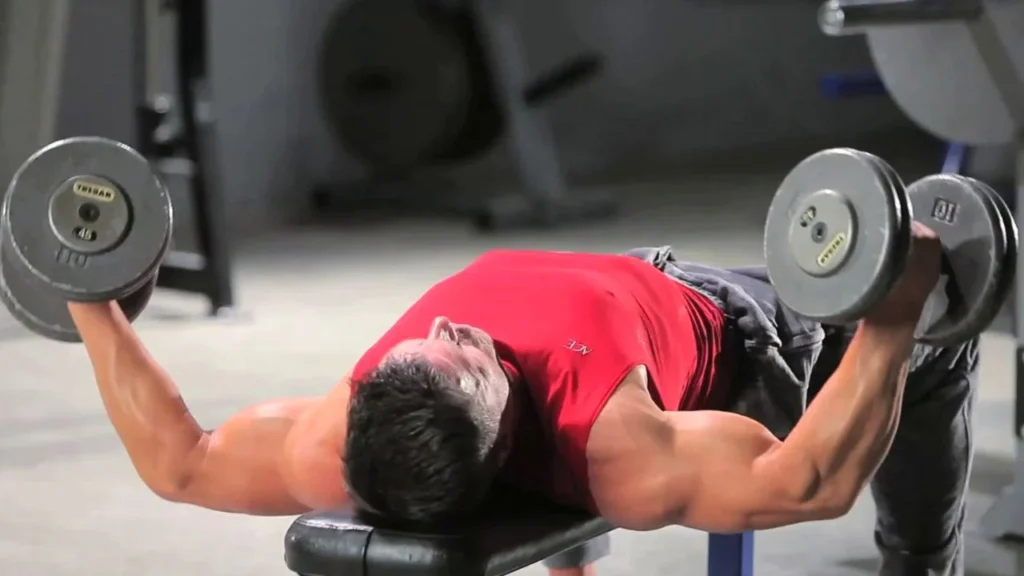
Press the dumbbells straight up to full arm extension above your chest. Now comes the most important technical detail that many people miss. Unlock your elbows by creating a slight bend of about ten to fifteen degrees. This elbow angle must remain constant throughout every single rep. Locking your elbows straight places dangerous stress on your joints and shifts work away from your chest.
Take a deep breath and actively retract your shoulder blades by squeezing them back and down into the bench. This shoulder blade position, called scapular retraction, creates a stable platform for the movement and protects your shoulder joints from excessive stress. Think about trying to hold a pencil between your shoulder blades.
Now slowly lower the dumbbells out to your sides in a smooth, controlled arc. Your forearms should stay perpendicular to the floor throughout the descent. Continue lowering until your upper arms reach roughly parallel with the bench or until you feel a strong but comfortable stretch across your chest. Never force your arms lower than chest level, as this can strain your shoulder capsule.
At the bottom position, pause for just a moment to feel that peak stretch in your pecs. Then explosively squeeze your chest muscles to bring the dumbbells back up along the same arc path. Focus on using your chest to move the weight, not your arms or shoulders. The dumbbells should come close together at the top but should not touch or bang together.
Breathe out forcefully as you bring the weights up, and breathe in as you lower them down. Proper breathing helps you maintain core stability and generates more power during each rep. The entire eccentric or lowering phase should take two to three full seconds, while the concentric or lifting phase can be slightly faster at about one to two seconds.
Why You Should Add Dumbbell Flys to Your Training
Incorporating the fly workout with dumbbells into your chest routine delivers multiple benefits that compound pressing movements alone simply cannot provide. Understanding these advantages helps you appreciate why this exercise has remained popular for generations of lifters.
The deep stretch you achieve at the bottom of each rep creates significant mechanical tension on your chest muscle fibers. Research from 2025 shows that exercises emphasizing the stretched position contribute substantially to muscle hypertrophy. The fly provides one of the best chest stretches available from any exercise, triggering growth signals throughout your pectoral muscles.
Improved chest flexibility and shoulder mobility represent another major benefit that many people overlook. The wide arc movement pattern helps open up tight chest muscles and can counteract the forward shoulder posture that develops from too much pressing or too much time sitting at desks. Better chest flexibility translates to improved posture and reduced upper back discomfort.
The fly workout with dumbbells dramatically enhances your mind-muscle connection with your chest. Because the movement requires less overall effort than heavy pressing, you can focus more mental energy on feeling your chest muscles stretch and contract. This improved awareness helps you activate your pecs more effectively during all your chest exercises, leading to better overall development.
Scapular stability improvements come as a natural side effect of maintaining that retracted shoulder blade position throughout your sets. Strong scapular muscles protect your shoulders during all upper body movements and contribute to better overall shoulder health. Many shoulder problems actually stem from weak or dysfunctional scapular muscles, making this benefit particularly valuable.
The exercise also helps identify and correct strength imbalances between your left and right sides. Because you control each dumbbell independently, your stronger side cannot compensate for your weaker side the way it can during barbell exercises. This forces both sides of your chest to develop equally, creating more balanced and symmetrical muscle development.
Dumbbell Fly Variations for Complete Chest Development
Once you master the standard flat bench variation, exploring different fly angles helps you target all areas of your chest for complete development. Each variation emphasizes different portions of your pectoralis major while maintaining that valuable isolation effect.
Incline Dumbbell Fly for Upper Chest
The incline dumbbell fly specifically targets your clavicular head or upper chest fibers. Set an adjustable bench to an angle between thirty and forty-five degrees. The steeper the incline, the more upper chest and anterior deltoid involvement you create. Most people find that thirty to thirty-five degrees provides the best balance between upper chest activation and shoulder comfort.
Perform the movement exactly as you would the flat version, maintaining that critical slight elbow bend throughout. The incline angle shifts the resistance vector upward, placing maximum tension on your upper pecs. This variation proves especially valuable if your upper chest development lags behind your mid and lower chest, a common issue for many lifters.
Studies from 2025 using electromyography have confirmed that incline variations produce significantly greater upper pec activation compared to flat variations. Adding incline flys to your routine helps fill in that area just below your collarbone, creating a more complete and impressive chest appearance.
Decline Dumbbell Fly for Lower Chest
The decline variation emphasizes your lower and mid chest fibers by changing the resistance angle. Set your bench to a decline of fifteen to thirty degrees. This position shifts peak tension to the sternal head of your pectoralis major, particularly the lower portions that contribute to that defined chest-to-abdomen separation line.
Exercise caution with decline variations if you have any issues with blood pressure or inner ear problems, as the head-down position can cause discomfort. Start with a shallow decline angle and only progress steeper if it feels comfortable. Many people find that decline flys create the strongest chest pump of any variation.
Floor Dumbbell Fly for Safety
The floor fly variation provides built-in safety by limiting your range of motion at the bottom of the movement. Lie on the floor with your knees bent and feet flat for stability. Perform the fly exactly as usual, but your elbows will contact the floor before reaching the full stretched position you achieve on a bench.
This reduced range of motion dramatically decreases shoulder stress, making floor flys perfect for beginners learning proper form or anyone dealing with minor shoulder discomfort. You still achieve excellent chest activation while protecting your joints. As you build strength and confidence, you can progress to bench variations for that deeper stretch.
Single Arm Dumbbell Fly
Performing flys one arm at a time challenges your core stability while allowing you to focus intense concentration on each side of your chest individually. Lie on a flat bench holding one dumbbell and keep your free hand on your abdomen or extended out to the side for balance. Execute the fly movement with perfect form on one side before switching to the other.
This unilateral variation helps correct any strength imbalances between your left and right sides. It also engages your core muscles more intensely as they work to prevent your torso from rotating. Start with lighter weight than you use for standard two-arm flys until you adapt to the balance challenge.
Critical Mistakes That Limit Your Results
Even experienced lifters sometimes fall into bad habits that reduce the effectiveness of the fly workout with dumbbells. Being aware of these common mistakes helps you avoid wasted effort and unnecessary injury risk. Let me walk you through the most important errors to avoid.
Using excessive weight tops the list of mistakes that plague this exercise. Your ego might want you to grab heavy dumbbells, but the fly demands lighter loads than pressing movements. The stretched position at the bottom creates tremendous leverage disadvantages that put your shoulders at risk when you use too much weight. If you cannot control the dumbbells smoothly throughout the entire range of motion, you are lifting too heavy.
Transforming the fly into a pressing movement happens when people bend their elbows progressively more as they lower the weight, then straighten them to press back up. This completely defeats the purpose of the exercise by removing tension from your chest and shifting it to your triceps. That slight elbow bend you establish at the start must stay absolutely constant through every inch of every rep.
Overextending at the bottom creates dangerous shoulder stress that can lead to serious injury. Some people lower the dumbbells far below chest level, mistakenly thinking more range of motion always equals better results. In reality, lowering past the point where your arms align with your torso stretches the shoulder capsule excessively without providing additional chest activation. Stop when you feel a good stretch, even if your arms have not reached parallel with the floor.
Letting your shoulder blades spread apart during the movement removes the stable base you need for safe execution. Throughout every rep, your scapulae should stay retracted and depressed into the bench. Allowing them to protract or elevate shifts stress to vulnerable structures in your shoulders and reduces the effectiveness of the exercise.
Banging the dumbbells together at the top might feel satisfying, but it gives your chest muscles a break at the point of peak contraction. Keep a small gap between the dumbbells at the top and focus on squeezing your chest muscles hard instead. This maintains constant tension throughout the set, which research shows contributes significantly to muscle growth.
Using momentum or bouncing the weights at the bottom turns a controlled isolation exercise into a dangerous ballistic movement. Every inch of every rep should move smoothly and deliberately. If you find yourself bouncing weights or jerking them around, you definitely need to reduce the load and focus on perfect form.
Smart Programming for Maximum Chest Growth
How you integrate the fly workout with dumbbells into your overall training program significantly impacts your results. Let me share evidence-based programming strategies that maximize chest development while managing fatigue and injury risk.
For muscle growth or hypertrophy, which most men pursue, aim for three to five working sets of eight to fifteen repetitions. This moderate rep range with controlled tempo creates optimal mechanical tension and metabolic stress for triggering muscle protein synthesis. Rest sixty to ninety seconds between sets to allow partial recovery while keeping your muscles under consistent training stress.
Perform your fly work after heavy compound pressing movements in most training sessions. Hit your bench press, incline press, or other primary chest exercises first when your nervous system is fresh and you can handle maximum loads. Then use flys to isolate and thoroughly fatigue your chest muscles after the heavy lifting is complete. This sequential approach allows you to benefit from both strength work and targeted hypertrophy training in the same session.
Some advanced lifters employ pre-fatigue protocols where they perform flys before pressing movements. This technique exhausts the chest muscles first, forcing them to work even harder during subsequent compound exercises. While effective for creating intense metabolic stress, pre-fatigue significantly reduces the weight you can press. Reserve this advanced technique for occasional variation rather than regular use.
Using flys as a workout finisher creates an intense pump and metabolic stress that may enhance muscle growth. After completing all your regular chest exercises, perform two to three sets of twelve to fifteen reps with lighter dumbbells and shorter rest periods of thirty to forty-five seconds. This final burst of volume floods your muscles with blood and metabolites associated with hypertrophy.
Training frequency matters significantly for optimal results. Most people see best progress performing chest workouts and therefore flys one to two times per week. This frequency provides adequate stimulus for growth while allowing sufficient recovery time between sessions. Your muscles grow during recovery, not during training, so resist the temptation to train chest more frequently than necessary.
Nutrition Strategies to Support Your Chest Development
Even perfect exercise technique cannot overcome poor nutrition when your goal is building a bigger, stronger chest. The food you eat provides the raw materials your body uses to repair and grow muscle tissue. Let me share key nutritional strategies that support your fly workout results.
Protein intake stands as the most critical nutritional factor for muscle growth. Recent research from 2026 recommends consuming approximately 1.6 to 2.2 grams of protein per kilogram of body weight daily for individuals engaged in resistance training. For a 180-pound man, this translates to roughly 130 to 180 grams of protein spread throughout the day.
Distribute your protein intake evenly across four to six meals rather than consuming most of it in one or two large servings. Studies show that eating 25 to 40 grams of protein per meal optimizes muscle protein synthesis. Each protein-rich meal triggers an anabolic response that helps repair and build muscle tissue damaged during your workout sessions.
High-quality protein sources should form the foundation of your muscle-building nutrition plan. Chicken breast, lean beef, fish, eggs, Greek yogurt, and whey protein supplements all provide complete amino acid profiles that support muscle growth. For men following plant-based diets, combining different protein sources like beans with rice ensures you get all essential amino acids.
The timing of protein intake around your workouts may provide additional benefits. Consuming 20 to 40 grams of protein within two hours after training helps jumpstart the recovery process. Many men find that a protein shake immediately post-workout provides a convenient way to hit this target without requiring a full meal.
Do not neglect carbohydrates in your quest for a bigger chest. Carbs provide the fuel your muscles need to train intensely and the glycogen stores necessary for recovery. Aim for 3 to 5 grams of carbohydrates per kilogram of body weight daily, emphasizing whole food sources like oats, rice, potatoes, and fruits.
Adequate overall calorie intake determines whether you can build new muscle tissue. You generally need a slight caloric surplus of 200 to 500 calories above your maintenance level to support muscle growth. Track your body weight and measurements weekly to ensure you are gaining muscle without excessive fat accumulation.
Tracking Progress and Adjusting Your Approach
Measuring your progress helps you determine whether your fly workout programming is delivering results or needs adjustment. Smart tracking provides objective feedback that guides your training decisions and keeps you motivated.
Record the weight you use for your fly sets along with the number of reps completed in each set. Aim for progressive overload by gradually increasing the weight or reps over time. Even small improvements of 2.5 pounds or one additional rep per set compound into significant strength and size gains over months and years.
Take chest measurements monthly using a fabric measuring tape. Measure around the fullest part of your chest with your arms relaxed at your sides. Track these measurements in a notebook or smartphone app to quantify your chest development objectively. Photos taken in consistent lighting and poses also help you visualize progress that day-to-day mirror checks might miss.
Pay attention to how your chest feels during and after training sessions. Achieving a strong mind-muscle connection and feeling your chest working throughout each fly set indicates proper form and effective muscle recruitment. If you consistently feel the exercise more in your shoulders or arms than your chest, review your technique carefully.
Listen to your body and adjust your training when necessary. Persistent shoulder discomfort signals that something needs to change, whether that means reducing weight, shortening range of motion, or taking extra recovery time. Pushing through pain leads to injury that sidelines your progress for weeks or months.
Ready to take your fitness to the next level and build the powerful chest you have always wanted? Visit MensBuddy for more expert training guides, nutrition strategies, and lifestyle tips designed specifically for men. Our comprehensive resources help you achieve your goals faster while avoiding common mistakes. Start building your best body today!
Frequently Asked Questions About Dumbbell Fly Workouts
What weight should I start with for dumbbell flys?
Begin with dumbbells that weigh roughly thirty to fifty percent of what you use for dumbbell bench press. For most beginners, starting with 10 to 15 pound dumbbells works well. The weight should feel manageable enough that you can control it smoothly through the entire range of motion without any jerking or bouncing. Perfect form always takes priority over lifting heavy weight, especially when learning this exercise.
How is the dumbbell fly different from the bench press?
The fundamental difference lies in the movement pattern. During bench press, you bend and straighten your elbows vertically to press the weight up and down. The fly keeps your elbows at a fixed slight bend while your arms move horizontally through an arc motion. Flys isolate your chest much more effectively, while bench press recruits your triceps, shoulders, and chest together as a compound movement. Both exercises serve important but different roles in chest development.
Can I do dumbbell flys with shoulder issues?
If you currently have shoulder pain or injury, consult with a physical therapist or sports medicine doctor before attempting flys. For minor shoulder discomfort, try the floor fly variation which limits range of motion and reduces joint stress. Using lighter weights and focusing on perfect form also helps protect your shoulders. Never push through sharp or persistent shoulder pain during any exercise.
How many times per week should I do fly exercises?
Most people achieve excellent results performing fly exercises one to two times weekly as part of their chest training. Your chest muscles need at least 48 to 72 hours between training sessions to recover and grow properly. Training chest more frequently than twice per week typically leads to inadequate recovery and can increase shoulder injury risk, especially with isolation exercises like flys.
Are cable flys better than dumbbell flys?
Neither exercise is objectively better than the other. They provide different training stimuli that complement each other well. Dumbbell flys offer a deeper stretch at the bottom position and allow for natural movement paths. Cable flys maintain more constant tension throughout the entire rep, including at the top where dumbbells provide less resistance. Many successful training programs include both variations to maximize chest development from different angles and resistance profiles.
Should the dumbbells touch at the top of each rep?
No, avoid banging or touching the dumbbells together at the top. Keep a small gap of two to four inches between them to maintain constant tension on your chest muscles. Allowing the dumbbells to contact each other gives your pecs a momentary rest that reduces the effectiveness of the exercise. Focus on squeezing your chest hard at the top rather than bringing the weights all the way together.
Can I build a big chest with just dumbbell flys?
While flys are excellent for chest development, building maximum size requires a combination of compound pressing movements and isolation exercises. Compound exercises like bench press allow you to handle heavier loads that build overall mass and strength. Flys then complement pressing work by targeting the chest from a different angle and providing that deep stretch. The best chest development comes from intelligently combining multiple exercises rather than relying on any single movement.
How long does it take to see results from dumbbell fly training?
Expect to notice improved mind-muscle connection and chest activation within two to three weeks of consistent training. Visible muscle growth typically becomes apparent after six to eight weeks of proper training and nutrition. Significant changes in chest size and strength usually require three to six months of dedicated effort. Remember that muscle building is a gradual process that rewards patience and consistency.
What should I do if I feel more in my shoulders than chest?
Excessive shoulder involvement usually indicates a form issue. First, check that you are maintaining scapular retraction throughout each rep by keeping your shoulder blades squeezed back and down. Second, verify that you are not lowering the dumbbells too far below chest level. Third, ensure you are keeping that slight elbow bend constant rather than straightening your arms. Reducing the weight often helps you focus on proper muscle recruitment patterns. If problems persist, consider working with a qualified personal trainer to assess your technique.
Safety Considerations and Injury Prevention
While the fly workout with dumbbells delivers outstanding results when performed correctly, improper execution can lead to shoulder injuries that sideline your training. Understanding key safety principles helps you maximize benefits while minimizing risk.
Your shoulder joint operates as a ball-and-socket mechanism with impressive range of motion but relatively less stability than other joints. The fly movement places your shoulder in a vulnerable position at the bottom of each rep when your arms are maximally stretched out to the sides. This position, called horizontal abduction, stresses the anterior shoulder capsule and surrounding connective tissues.
Never sacrifice shoulder safety for the sake of achieving a deeper stretch. If you feel any pinching, clicking, or sharp pain in the front of your shoulder during flys, stop immediately and reassess your form. Sharp pain indicates you are exceeding your safe range of motion or using too much weight. Dull, aching discomfort in the muscle itself is normal training sensation, but joint pain always signals a problem.
Warming up properly before performing flys helps prepare your shoulders for the demands of the exercise. Spend five to ten minutes doing light cardio to increase blood flow, then perform dynamic shoulder movements like arm circles and band pull-aparts. Execute one or two warm-up sets of flys with very light weight before your working sets to groove the movement pattern and prime your nervous system.
Age considerations matter for shoulder health during fly training. Men over forty often have reduced shoulder flexibility and may have accumulated some wear and tear in their rotator cuffs. If you fall into this age group, be especially conservative with your range of motion and weight selection. The floor fly variation works particularly well for older lifters as the built-in range limiter protects the shoulders.
Final Thoughts on Mastering the Fly Workout
The fly workout with dumbbells represents one of the most valuable tools available for building an impressive chest. Its unique movement pattern creates muscle tension and stretch that pressing exercises alone cannot provide. When you combine perfect technique, smart programming, and proper nutrition, this single exercise can transform your chest development.
Remember that patience and consistency matter far more than any individual workout session. Building a bigger, stronger chest requires months and years of dedicated training, not weeks. Focus on progressive overload by gradually increasing weight or reps over time, but never at the expense of proper form. Quality repetitions always trump quantity when it comes to muscle building.
Start with the basic flat bench variation until you master the movement pattern completely. Once you can execute flys with perfect form and a strong mind-muscle connection, explore the various incline and decline angles to target different areas of your chest. This systematic approach builds a solid foundation while minimizing injury risk.
Listen to your body and adjust your training based on how you feel. Some days your shoulders might feel slightly stiff or fatigued, signaling that you should reduce weight or volume. Other days you might feel strong and energized, allowing you to push a bit harder. This intuitive approach to training helps you maximize long-term progress while avoiding overtraining.
Whether you train in a commercial gym, home gym, or anywhere in between, the fly workout with dumbbells deserves a permanent place in your chest routine. Give this exercise the attention and respect it demands, and your chest will reward you with impressive size, strength, and definition that reflects your dedication.