


You want to get in shape, but the gym feels like a hassle, an expense, or just intimidating right now. Good news: a beginner home workout for men can build real strength, burn fat, and get you moving better in less time than you’d spend driving to a gym. All you need is your body, a little floor space, and about 30 minutes, three or four times a week.
What Makes a Home Workout Plan Actually Work for Beginners?
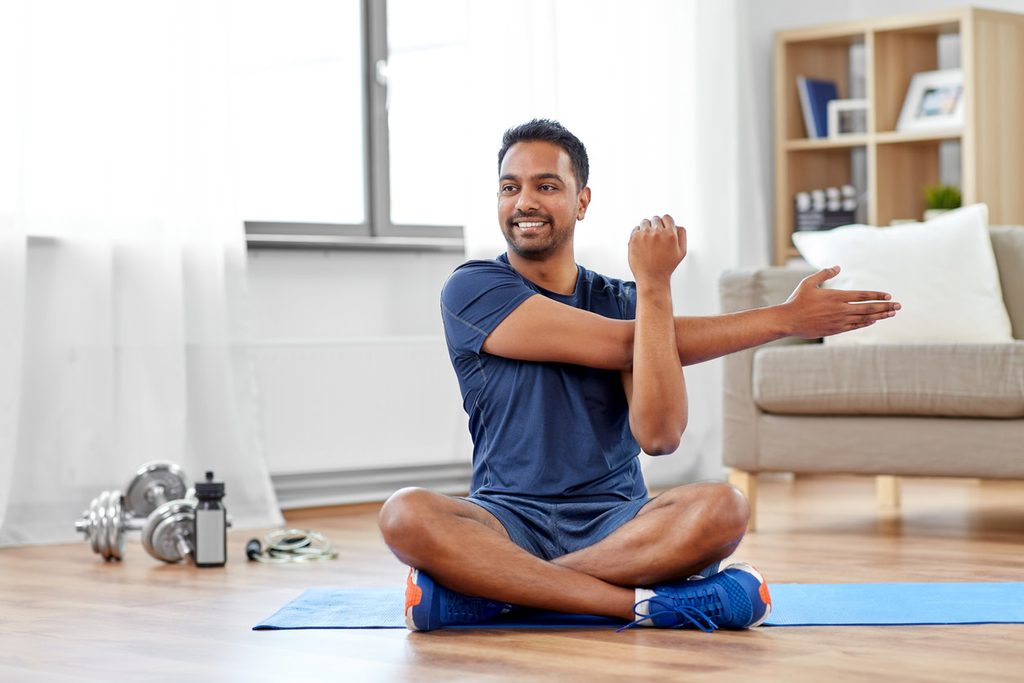
A beginner home workout for men works when it hits three things: full-body compound movements, progressive overload, and consistency you can actually stick to. Skip any one of those and you’ll spin your wheels for months.
Most guys who quit home workouts don’t quit because bodyweight training doesn’t work — they quit because they never had a plan. They do twenty minutes of random push-ups and squats on Monday, feel sore, skip the rest of the week, and conclude “home workouts don’t do anything.” That’s not a training problem. That’s a structure problem.
The fix is simple: pick a handful of proven movements, do them on a schedule, and add difficulty every week or two. That’s the entire system behind every good home workout plan with no equipment, and it’s the same principle gyms use — you’re just using your bodyweight and gravity instead of a barbell.
Do You Actually Need Equipment to Build Muscle at Home?
No. You can build noticeable strength and muscle with bodyweight training alone, especially in your first six months of consistent training. Push-ups, squats, lunges, planks, and pull-ups (using a doorframe bar or sturdy furniture edge) cover almost every major muscle group your body has.
That said, two cheap additions make progress faster once bodyweight movements get easy: a pair of adjustable dumbbells and a resistance band. Neither is required to start. If your budget is zero, you can train hard and see results for months before bodyweight exercises alone stop challenging you. A resistance band costs less than a fast-food meal and packs into a drawer, which makes it the single best first purchase once push-ups and rows start feeling too easy. Adjustable dumbbells come later, once you’re ready to load squats and presses beyond what your bodyweight alone can challenge.
The Bodyweight Movements That Matter Most
Here’s a bodyweight workout for men that covers your whole body without a single machine:
- Push-ups — chest, shoulders, triceps, core
- Squats — quads, glutes, hamstrings
- Reverse lunges — single-leg strength and balance
- Plank — core stability, lower back protection
- Glute bridges — posterior chain, hip strength
- Doorframe rows or towel rows — back and biceps
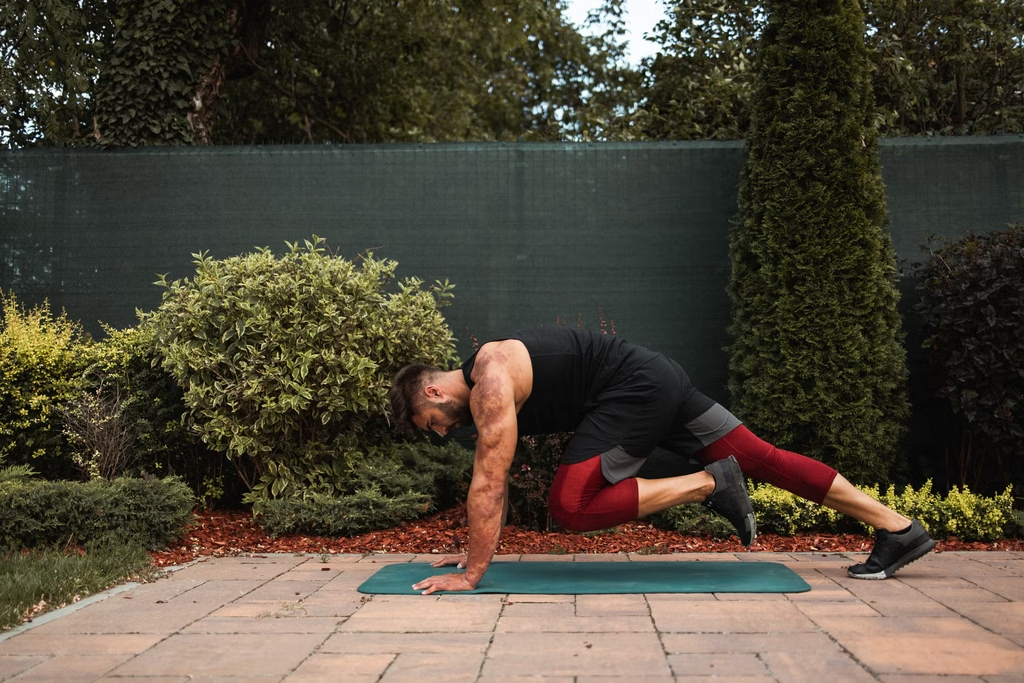
- Mountain climbers — conditioning and core
Learn these seven movements well and you have a complete training system. Everything else is just variation.
How to Start Working Out at Home the Right Way
The biggest mistake beginners make is going too hard, too fast. You do 45 minutes on day one, wake up so sore you can barely sit down, and skip the next four days waiting to recover. That single decision kills more home workout routines than laziness ever does.
Start smaller than you think you need to. Your first two weeks should feel almost too easy. Here’s how to start working out at home without wrecking yourself:
- Train three days a week, not seven. Monday, Wednesday, Friday is plenty for a beginner strength training at home plan. Your muscles grow during rest, not during the workout itself.
- Cap your first sessions at 20-25 minutes. Long workouts you dread never survive contact with a busy week. Short ones you can actually finish do.
- Master the movement before you add difficulty. A slow, controlled push-up with your chest touching the floor beats twenty sloppy half-reps every time.
- Warm up for five minutes. Arm circles, bodyweight squats, hip openers, and a light jog in place get blood into your muscles and joints before you load them.
- Track what you do. Write down your reps and sets. If you did 8 push-ups last Monday, aim for 9 or 10 this Monday. That’s progressive overload, and it’s the actual engine behind every result you’ll see.
If you have an existing injury, a heart condition, high blood pressure, or any other health concern, talk to your doctor before starting this or any new exercise program. That’s not a throwaway disclaimer — a five-minute conversation can save you a setback that costs you months.
The 4-Week Beginner Home Workout Plan
Below is a complete home workout plan no equipment required, built to run for four weeks. Each week nudges the difficulty up slightly so your body keeps adapting instead of plateauing.
| Week | Day 1 (Push/Squat) | Day 2 (Pull/Hinge) | Day 3 (Full Body + Core) |
|---|---|---|---|
| Week 1 | Push-ups 3×8, Squats 3×12, Plank 3x20s | Doorframe rows 3×8, Glute bridges 3×12, Reverse lunges 3×8/side | Push-ups 2×8, Squats 2×12, Mountain climbers 3×20, Plank 2x20s |
| Week 2 | Push-ups 3×10, Squats 3×15, Plank 3x30s | Doorframe rows 3×10, Glute bridges 3×15, Reverse lunges 3×10/side | Push-ups 3×10, Squats 3×15, Mountain climbers 3×25, Plank 3x25s |
| Week 3 | Push-ups 4×10, Squats 4×15, Plank 3x40s | Doorframe rows 4×10, Glute bridges 4×15, Reverse lunges 4×10/side | Push-ups 3×12, Squats 3×18, Mountain climbers 4×25, Plank 3x35s |
| Week 4 | Push-ups 4×12, Squats 4×18, Plank 3x50s | Doorframe rows 4×12, Glute bridges 4×18, Reverse lunges 4×12/side | Push-ups 4×12, Squats 4×18, Mountain climbers 4×30, Plank 3x45s |
Rest 45-60 seconds between sets in weeks 1-2, and 60-90 seconds in weeks 3-4 as the volume climbs. Take at least one full rest day between each training session — your Tuesday, Thursday, and weekend should be recovery days, not “maybe I’ll work out” days.
By the end of week four, you’ll notice push-ups that used to burn your shoulders now feel manageable, and that’s your cue to add a variation — decline push-ups, single-leg glute bridges, or a slower three-second lowering phase on your squats.
How to Progress Once You Finish the 4-Week Plan
Finishing week four doesn’t mean you’re done — it means your body has adapted, and it’s time to make the movements harder again. This is where most beginners get stuck: they keep doing the exact same push-ups and squats for months and wonder why progress stalls out.
Here are four ways to keep a beginner home workout for men challenging without buying anything new:
- Slow the tempo down. Take three full seconds to lower into a squat or push-up instead of dropping fast. Slower reps under control build more strength than fast, bouncy ones.
- Add a pause. Hold the bottom of a squat or lunge for two seconds before standing back up. That pause removes momentum and forces your muscles to do all the work.
- Change the leverage. Elevate your feet for a decline push-up, or try single-leg glute bridges instead of two-leg ones. Small changes in leverage make familiar movements feel brand new.
- Add a fifth day. Once your body handles three sessions comfortably, add a fourth or fifth short session focused on core work, mobility, or extra conditioning like mountain climbers and jumping jacks.
If you’ve genuinely maxed out what bodyweight alone can offer — you’re cranking out 25-plus clean push-ups and deep squats for high reps without much effort — that’s the point to introduce a resistance band or a pair of dumbbells, not before. Adding load too early just makes your form sloppier without adding much benefit.
Bodyweight Workout vs. Gym Workout: Which Should You Actually Choose?
Neither one is objectively better — they solve different problems. Here’s how a beginner home workout for men stacks up against a traditional gym routine:
| Factor | Home Bodyweight Workout | Gym Workout |
|---|---|---|
| Cost | Free to low cost | Monthly membership fee |
| Time | No commute, train anytime | Travel time plus wait for equipment |
| Strength ceiling | High for beginners, slows after 6-12 months | Higher long-term ceiling with free weights |
| Consistency | Easier for busy schedules | Easier to lose motivation with travel |
| Best for | Beginners, busy guys, home-based starts | Intermediate/advanced lifters chasing max strength |
If you’re brand new to training, home workouts are genuinely the smarter starting point. You’ll build a strength base, learn how your body moves, and develop the habit of showing up — all before you ever have to worry about gym etiquette or waiting for a squat rack. Once bodyweight training stops challenging you, that’s your signal to add dumbbells, bands, or a gym membership, not before.
How Long Until You See Results From a Home Workout?
Most beginners notice better energy and easier movement within two weeks, visible muscle definition changes around week six to eight, and real strength gains — doing exercises that felt impossible in week one — by week four. Results depend heavily on your diet, sleep, and consistency, but the training side of the equation moves faster than most guys expect.
Don’t chase the mirror in week one. Chase the workout log. If your numbers are climbing — more reps, more sets, better form, longer planks — the physical changes are already happening underneath the surface, even before they’re visible.
Nutrition Matters More Than People Admit
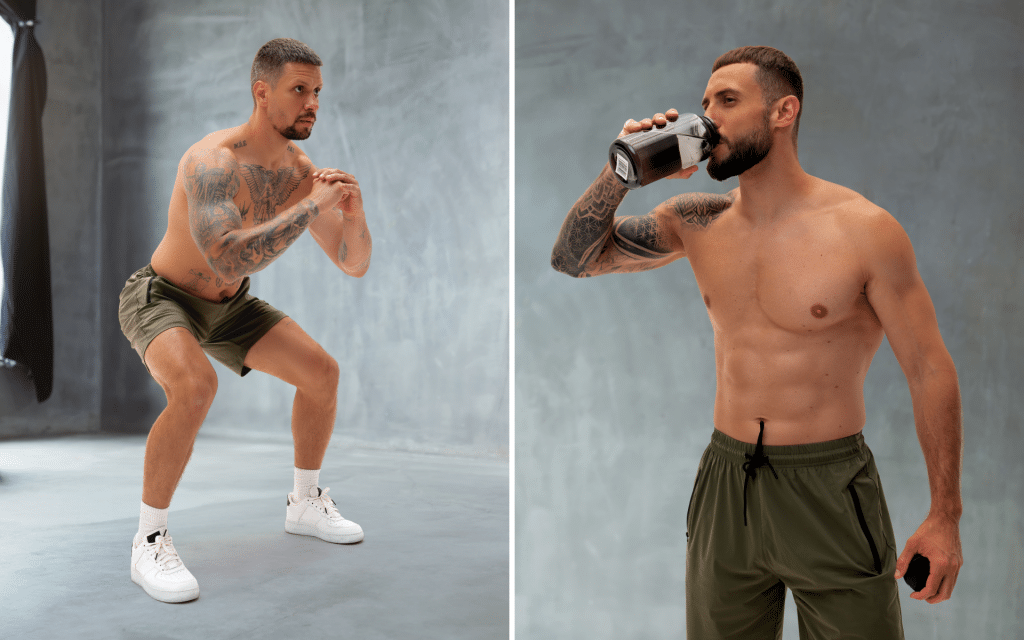
You can’t out-train a bad diet, especially at home where the kitchen is twenty feet away. You don’t need a complicated meal plan to support a beginner strength training at home routine — just enough protein to repair the muscle you’re breaking down and enough total food to fuel your training. Aim for a source of protein at most meals: eggs, chicken, Greek yogurt, or beans and lentils if you’re eating plant-based. If you’re vegan or mostly plant-based, get familiar with solid protein sources so you’re not accidentally under-fueling your recovery.
Sleep matters just as much, and it’s the piece most guys ignore completely. Your muscles don’t grow during the workout — they grow during the seven to nine hours after it, while you’re asleep and your body is repairing what you broke down. Cutting sleep short to squeeze in an extra hour of something else will quietly stall your results no matter how hard your training looks on paper.
Recovery isn’t just about muscles, either. Training regularly means you’ll sweat more, so keeping your skin clean and your basic grooming routine dialed in matters more than it did when you were sedentary — a quick post-workout shower and a simple skincare routine go a long way toward avoiding breakouts and body acne that catch a lot of new lifters off guard.
Common Beginner Mistakes to Avoid
Even a good plan on paper falls apart if you fall into one of these traps. Most of them come from impatience, not laziness — you want results fast, so you push harder or skip steps that actually matter.
- Skipping warm-ups. Cold muscles get injured muscles. Five minutes now saves you weeks later.
- Doing too much too soon. Three sessions a week beats seven burnout sessions that leave you too sore to move.
- Ignoring form for reps. A half push-up doesn’t count as a push-up. Depth and control build strength; sloppy reps build bad habits.
- Never progressing. Doing the exact same 3×10 push-ups for three months stalls your results. Add reps, slow the tempo, or change the angle.
- Training without a plan. Random exercises in random order is how people quit. Follow a structured plan, even a simple one, and results follow.
FAQs About Beginner Home Workouts
Can I really build muscle with just bodyweight exercises?
Yes. Push-ups, squats, lunges, and rows create enough resistance to build meaningful muscle and strength for beginners, especially in the first several months of consistent training. Add slower reps, single-leg variations, or a resistance band once basic movements get easy.
How many days a week should a beginner work out at home?
Three days a week is ideal for beginners. This gives your muscles 48 hours to recover between sessions while still building the habit of regular training, which matters more than training volume in your first month.
Do I need a pull-up bar for a home workout plan with no equipment?
No. A doorframe or towel row can substitute for back exercises until you’re ready to invest in a pull-up bar. It’s a helpful upgrade later, not a requirement to start.
How long should a beginner home workout be?
20 to 30 minutes is plenty for a beginner session. Longer workouts sound impressive but often lead to burnout and skipped days, while shorter, consistent sessions build the habit that actually produces results.
Is it normal to be sore after starting a home workout plan?
Some muscle soreness in the first one to two weeks is normal and usually fades within 48-72 hours. Sharp or joint pain is not normal — stop the movement and consult a doctor if pain persists or worsens.
Should I stretch before or after my home workout?
Save static stretching for after your workout, when muscles are warm. Before training, use dynamic movement — arm circles, leg swings, bodyweight squats — to prepare your joints without reducing strength output.
Your Next Step
You don’t need a gym membership, a garage full of equipment, or a perfect schedule to get stronger. You need the seven movements above, three days a week, and the discipline to add one more rep than last time. Pick your start day, write down week one on your calendar, and begin.