

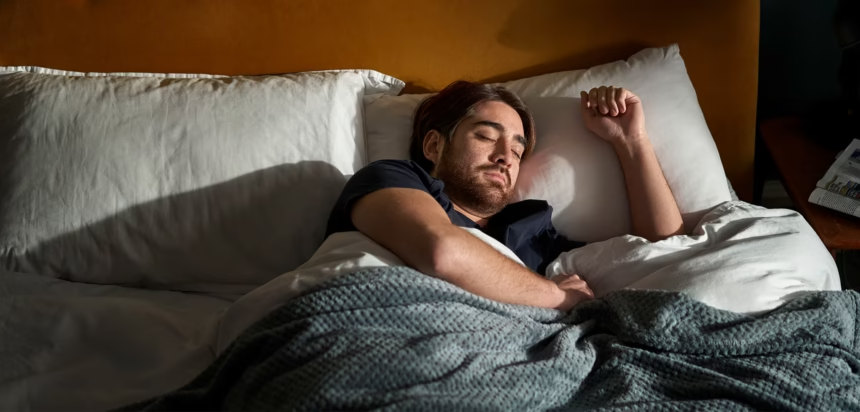
You lie down at 11, and your brain decides that’s the perfect time to replay every awkward conversation you’ve had since middle school. Or you fall asleep fine but wake up at 3 a.m. wide awake, staring at the ceiling fan. If either sounds familiar, you’re not broken — you’ve just picked up habits that work against your body’s clock instead of with it. Here’s how to sleep better for men who are done wasting a third of their life staring at nothing.
Why Can’t I Sleep at Night? (The Usual Culprits)
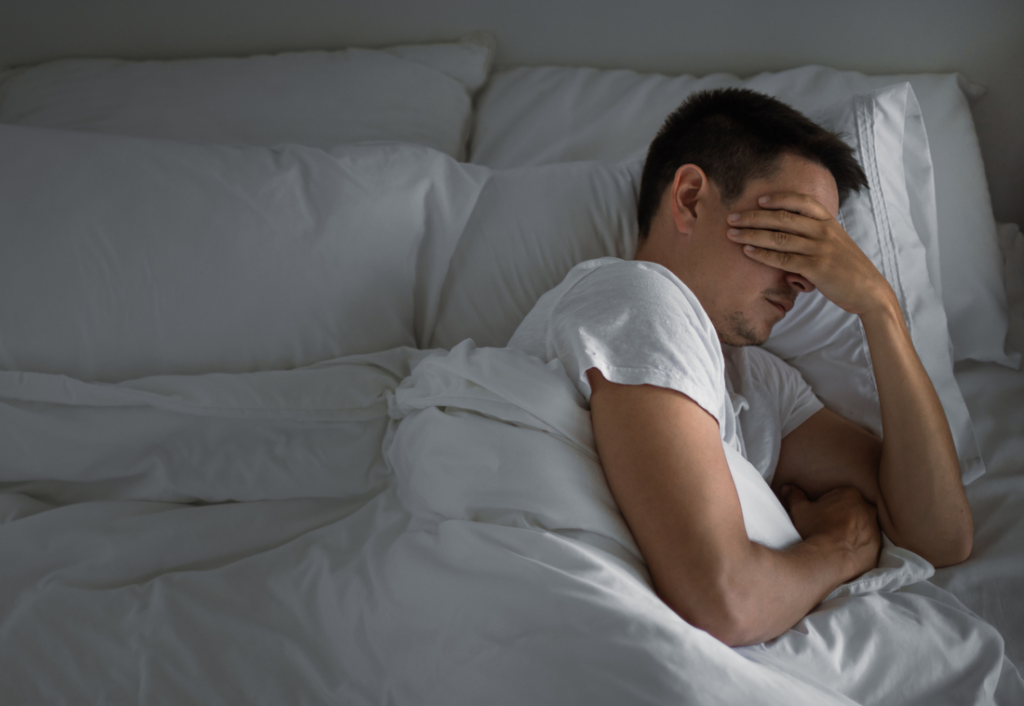
Most men who can’t sleep aren’t dealing with some mystery condition — they’re dealing with self-inflicted sabotage. The biggest offenders are late caffeine, inconsistent bedtimes, screens right before lights-out, and a bedroom that’s too warm or too bright. Your body runs on a roughly 24-hour internal clock called your circadian rhythm, and it takes cues from light, temperature, and routine. Mess with those cues enough nights in a row, and your body genuinely doesn’t know when it’s supposed to shut down.
There’s also the stress factor. Work deadlines, money, relationships — your brain likes to save its “let’s think about this” sessions for the exact moment your head hits the pillow. That’s not a coincidence. During the day you’re distracted enough to outrun your own thoughts. At night, with nothing else competing for your attention, they catch up to you.
A third cause gets overlooked constantly: alcohol. A lot of guys use a beer or two (or four) to wind down, thinking it helps them sleep. It does get you unconscious faster. But alcohol wrecks the second half of your night — it blocks deep sleep and REM sleep, and you’ll wake up around 3 or 4 a.m. with your heart rate slightly elevated, unable to fall back asleep. If you’re chasing better sleep, alcohol before bed is one of the first things to cut, not one of the last.
How to Sleep Better for Men — The Sleep Hygiene Basics That Actually Work
Sleep hygiene tips get thrown around a lot, and most of them sound obvious — but almost nobody actually does them consistently. The fastest way to sleep better for men isn’t a supplement or a gadget. It’s fixing three things: light exposure, your wake-up time, and what you put in your body in the six hours before bed.
Get Morning Sunlight, Even If It’s Cloudy
Your circadian rhythm resets every single day based on when you first see bright light. Step outside for 5 to 10 minutes within an hour of waking up — no sunglasses. This single habit does more for your nighttime sleep than almost anything else on this list, because it tells your brain exactly when the day started, which sets the timer for when melatonin should start rising roughly 14 to 16 hours later. Guys who work in an office all day and never see real daylight until they leave at 6 p.m. are fighting their own biology every single night.
Pick a Wake-Up Time and Don’t Touch It
Everyone obsesses over bedtime. Your wake-up time matters more. If you go to bed at wildly different times but always get up at 6:30 a.m., your body starts anchoring around that wake time and you’ll naturally get sleepy at a consistent hour at night. Sleeping in until 11 a.m. on Saturday to “catch up” feels good in the moment, but it shifts your internal clock like you flew two time zones west, and Sunday night you’re lying awake again. Weekend wake-up time within an hour of your weekday time is one of the most underrated best sleep habits for men.
Cut Caffeine Earlier Than You Think You Need To
Caffeine has a half-life of about 5 to 6 hours, meaning half the caffeine from your 3 p.m. coffee is still in your system at 9 p.m. For most men, the cutoff needs to be around noon to 1 p.m. if you’re a slow metabolizer, or at least 8 hours before bed no matter what. Notice you feel “tired but wired” at night, like you’re exhausted but can’t settle? Check your afternoon coffee habit first.
How to Fall Asleep Faster When Your Brain Won’t Shut Off
The fastest way to fall asleep faster is to stop trying to force it — instead, get out of bed after about 20 minutes of lying awake, do something boring in dim light, and come back when you actually feel drowsy. Fighting for sleep just trains your brain to associate your bed with frustration instead of rest.
Here’s the mechanism worth understanding: your brain builds an association between your bed and whatever you do there. If you scroll your phone, watch TV, or lie there stressing about tomorrow, your brain starts treating the bed as a place for stimulation and anxiety, not sleep. Over weeks and months, that association gets stronger, and eventually you can be exhausted and still lie there wired the second you get under the covers.
Try the 20-Minute Rule
If you’re not asleep within about 20 minutes, get up. Go sit in another room with a dim lamp — not your phone — and read something unexciting, or just sit quietly. When you feel genuinely sleepy, go back to bed. This breaks the cycle of lying there getting more frustrated and more awake, which is exactly what happens when you “try harder” to sleep.
Slow Your Breathing Down
A simple breathing pattern — in for 4 seconds, hold for 4, out for 6 to 8 — activates your parasympathetic nervous system, the part responsible for calming you down. You don’t need an app for this. Do it for two or three minutes while lying in bed with the lights off. It won’t knock you out instantly, but it interrupts the spiral of racing thoughts enough for your body to start winding down.
Write Down Tomorrow’s To-Do List Before Bed
If your brain won’t stop running through tasks, give it somewhere to put them. Keep a notepad by the bed and write down the three things you need to handle tomorrow. This sounds too simple to work, but offloading the list from your head onto paper removes the reason your brain keeps rehearsing it — it no longer has to hold onto the information to avoid forgetting it.
Best Sleep Habits for Men — An Evening Wind-Down Schedule

Trying to fix everything at once usually fails. A simple, repeatable evening routine works better than a long list of rules you’ll abandon in a week. Here’s a practical schedule you can adapt:
| Time Before Bed | What To Do |
|---|---|
| 2 hours before | Finish eating. Dim the overhead lights and switch to lamps. |
| 90 minutes before | Last caffeine or nicotine of any kind, no exceptions. |
| 60 minutes before | Phones and laptops off, or at minimum on night mode across the room, not in your hand. |
| 30 minutes before | Shower or stretch. A warm shower followed by cooling down helps trigger drowsiness. |
| 10 minutes before | Lights off, breathing exercise or a few minutes of reading a physical book. |
What to Do — and What to Avoid — Before Bed
Some habits move you toward sleep, others actively work against it. Here’s a straightforward comparison so you know exactly what to prioritize.
| Do This | Not This |
|---|---|
| Keep your bedroom between 65–68°F | Sleeping in a room that’s warm or stuffy |
| Use blackout curtains or an eye mask | Leaving a TV or streetlight glow on all night |
| Read a physical book or listen to a podcast | Scrolling social media in bed |
| Get sunlight within an hour of waking | Waking up and immediately checking your phone |
| Keep a consistent wake-up time, weekends included | Sleeping in three extra hours on Saturday |
| Have a light snack if you’re hungry (a banana, some nuts) | Eating a heavy meal within two hours of bed |
| Use your bed only for sleep | Working, eating, or scrolling from bed during the day |
Why Can’t I Sleep at Night Even When I’m Exhausted?
Being exhausted and being able to sleep are two different things — exhaustion is a level of tiredness, while your ability to fall asleep depends on your nervous system actually calming down, and stress or stimulation can keep you wired even when you’re running on empty. This is why guys who work brutal hours often report lying awake despite feeling wrecked all day. Cortisol, your body’s primary stress hormone, spikes with anxiety and physical overexertion late in the day, and it directly competes with the melatonin your body is trying to release.
If this is you, the fix isn’t more exhaustion — it’s a genuine buffer between “working” and “sleeping.” Even 20 minutes of doing something completely unrelated to work or stress — stretching, a short walk, talking to someone, anything that isn’t a screen — gives your cortisol levels time to drop before you try to sleep. Going straight from your laptop to your pillow rarely works, no matter how tired you are.
This is also where a lot of men sabotage themselves without realizing it: answering one last work email in bed, or checking tomorrow’s schedule “just quickly” right before turning off the lamp. That single action tells your brain it’s still go-time, and cortisol doesn’t drop on command the moment you close your eyes. Build a real transition instead — a shower, a few pages of a book, even just sitting on the couch doing nothing for fifteen minutes counts as a signal to your nervous system that the day is actually over.
Does Your Bedroom Setup Actually Matter?
Yes — temperature, light, and noise are the three biggest environmental factors in sleep quality, and getting all three wrong can undo every other good habit on this list. Your body’s core temperature needs to drop by roughly 2 degrees to initiate and maintain deep sleep, which is why a room that’s too warm leaves you tossing and turning even when you’re tired.
Keep your room cool, dark, and quiet. If you can’t control noise — thin walls, a partner who snores, city traffic — a fan or a white noise machine does more good than most people expect, because it masks sudden sound spikes that jolt you out of deep sleep without you fully waking up enough to remember it. Mattress and pillow matter too, but they’re the last 10% — fix the basics first before you spend money assuming a new mattress will solve a habit problem.
Blackout curtains are worth the twenty bucks. Even small amounts of light — a streetlamp through thin blinds, a charging LED, a hallway light under the door — can suppress melatonin enough to keep your sleep lighter and more fragmented than it should be. If blackout curtains aren’t an option, a cheap sleep mask does almost the same job. Same goes for your thermostat: most men keep their bedroom warmer than it should be, especially in winter, without realizing that a slightly cold room is exactly what your body wants at night.
When Bad Sleep Is More Than Just Bad Habits

Everything above assumes ordinary, garden-variety bad sleep — the kind caused by habits you can actually change. But if you’re doing all of this consistently and still struggling, or if you snore loudly and wake up gasping, feel exhausted no matter how many hours you get, or you’ve dealt with chronic insomnia lasting more than a few weeks, it’s worth talking to a doctor. Conditions like sleep apnea are common in men, especially with extra weight around the neck, and they don’t get fixed by a better bedtime routine — they need an actual diagnosis. Don’t tough it out for months assuming willpower will fix a medical issue.
Frequently Asked Questions
How many hours of sleep do men actually need?
Most adult men need between 7 and 9 hours of sleep per night to function at full capacity, though the exact number varies by individual. Consistently getting under 6 hours affects testosterone production, recovery, focus, and mood, even if you feel like you’ve “adapted” to less.
Why do I wake up at 3 a.m. every night?
Waking up in the middle of the night is often caused by alcohol wearing off, a bedroom that’s too warm, stress hormones spiking, or a blood sugar dip from eating too little or too much before bed. If it happens occasionally, don’t stress about it — get up briefly if you can’t fall back asleep within 20 minutes rather than lying there frustrated.
Is it bad to sleep with your phone next to your bed?
Keeping your phone within reach makes it far more likely you’ll check it during a middle-of-the-night wake-up, which delays your return to sleep and exposes you to blue light that suppresses melatonin. Charging it across the room is a simple fix that removes the temptation entirely.
Does exercise help you sleep better?
Regular exercise, especially in the morning or early afternoon, improves sleep quality and helps you fall asleep faster. Intense workouts within 1 to 2 hours of bedtime can backfire for some men by raising core body temperature and adrenaline right when you’re trying to wind down.
Can naps ruin your nighttime sleep?
A short nap of 20 to 30 minutes earlier in the day usually won’t hurt your nighttime sleep, but napping after 3 p.m. or napping for over an hour can reduce your sleep drive and make it harder to fall asleep that night. If you’re struggling with nighttime sleep already, cutting naps entirely for a week is a useful test.
What’s the fastest way to fall asleep faster tonight?
Get your room cool and dark, put your phone across the room, and use a slow breathing pattern of inhaling for 4 seconds and exhaling for 6 to 8 seconds. It won’t fix months of bad habits in one night, but it’s the quickest lever you can pull right now.
Your Next Step
Better sleep isn’t about one trick — it’s the compound effect of a handful of boring, repeatable habits: sunlight in the morning, an earlier caffeine cutoff, a consistent wake-up time, and a bedroom that’s cool and dark. Pick two changes from this list and run them for two weeks before adding more. Your sleep didn’t get bad overnight, and it won’t get fixed overnight either — but you’ll likely notice a difference within a week if you’re consistent.