



Low testosterone is typically framed as a condition that exclusively affects men over 50. But research published in JAMA Internal Medicine (2025) confirms something deeply concerning: the average testosterone levels of men in their 20s have declined by approximately 25% over the last three decades — and younger men are increasingly presenting with symptoms that were once considered exclusive to their fathers’ and grandfathers’ generation.
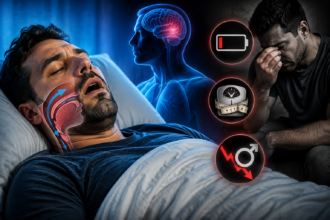
If you are under 30 and experiencing unexplained fatigue, reduced libido, difficulty building muscle, persistent brain fog, or significant mood changes, low testosterone may be a major contributing factor. This guide covers every warning sign to watch for, what specifically causes low T in young men in 2026, and the most effective evidence-based strategies to address it.
📊 JAMA Internal Medicine (2025): Average testosterone in men aged 20 to 29 has declined by approximately 25% since 1990. Lifestyle factors, environmental endocrine disruptors, and rising obesity rates are identified as the primary contributing factors.
Why Are Young Men Developing Low Testosterone in 2026?
Several powerful modern factors are driving the decline in testosterone among men under 30:
- Obesity and excess body fat: Adipose (fat) tissue converts testosterone to estrogen via the enzyme aromatase. More body fat means more conversion and lower circulating free testosterone.
- Chronic sleep deprivation: Approximately 70% of daily testosterone is produced during deep sleep. Men sleeping fewer than 6 hours consistently show testosterone levels equivalent to men 10 to 15 years older.
- Sedentary lifestyle: Physical inactivity significantly reduces the testosterone production signal. Resistance training is one of the strongest natural stimulants of T production available.
- Endocrine-disrupting chemicals: BPA in plastic food and beverage containers, pesticide residues on non-organic produce, and phthalates in personal care products all mimic estrogen and suppress testosterone at the cellular level.
- Chronic psychological stress: Elevated cortisol directly suppresses the HPG (hypothalamic-pituitary-gonadal) axis — the hormonal cascade responsible for testosterone production.
- Ultra-processed dietary patterns: High chronic consumption of seed oils, refined carbohydrates, and added sugar is independently associated with lower testosterone through insulin resistance, systemic inflammation, and hormonal disruption.
12 Warning Signs of Low Testosterone in Men Under 30
1. Persistent Fatigue Not Explained by Insufficient Sleep
Testosterone plays a central role in cellular energy metabolism throughout the body. Men with genuinely low T frequently describe a pervasive, deep tiredness that is distinctly different from normal tiredness after a long day — it is not resolved by sleeping more or resting more. If you find yourself chronically exhausted despite getting 7 to 9 hours of sleep and having no other identifiable medical explanation, low testosterone is worth investigating with a blood test.
2. Significantly Reduced Sex Drive
Testosterone is the primary biological driver of sexual desire in men. A noticeable, sustained, and unexplained reduction in libido — particularly in a young man with no significant relationship stress, mental health challenges, or medication use — is one of the clearest and most consistent early indicators of low T. This is frequently the first symptom young men notice and the one that most often prompts them to seek hormone testing.
3. Erectile Dysfunction or Reduced Erection Quality
While erectile dysfunction in men under 30 has multiple potential causes and is often psychological or vascular in origin, testosterone plays an important role in nitric oxide production — the signalling molecule responsible for the blood flow that produces and maintains erections. Low T can contribute to reduced erection frequency, quality, firmness, and the absence or reduction of morning erections — which are a useful indirect indicator of overall hormonal health in young men.
4. Difficulty Building or Maintaining Muscle Despite Consistent Training
Testosterone is fundamentally anabolic — it is absolutely essential for muscle protein synthesis and for retaining existing muscle tissue during periods of reduced activity or caloric restriction. Young men with low T frequently report that despite training consistently, eating adequate protein, and following a good programme, their muscle growth is dramatically slower than that of peers using the same approach, and they lose muscle easily during any training break.
5. Unexplained Increase in Body Fat — Particularly Abdominal Fat
Low testosterone actively promotes fat storage, particularly visceral (deep abdominal) fat. This creates a genuinely vicious and self-reinforcing cycle: more belly fat leads to more aromatase enzyme activity, which converts more testosterone to estrogen, which leads to even lower testosterone and even more fat storage. Young men experiencing unexplained belly fat accumulation despite a reasonable diet and some exercise may be experiencing this hormonal cascade.
6. Brain Fog and Persistent Difficulty Concentrating
Testosterone receptors are present throughout multiple brain regions. Low testosterone levels are independently associated with reduced cognitive clarity, slower information processing speed, poor working memory, and difficulty maintaining focus on complex tasks. Many men describe this as thinking through a mental fog, feeling mentally slower than usual, or being unable to concentrate the way they could previously — often mistaking it for stress or burnout.
7. Significant Mood Changes, Irritability, and Depression
Testosterone has substantial mood-regulating effects throughout the central nervous system. Low T is independently associated with increased depression, anxiety, irritability, reduced motivation, and a general sense of low drive or apathy. A 2024 meta-analysis in The Lancet Psychiatry found that men with clinical hypogonadism had a 63% higher prevalence of depressive symptoms than testosterone-replete men of similar ages.
📊 The Lancet Psychiatry (2024): Men with clinically low testosterone have a 63% higher rate of depressive symptoms compared to men with healthy, age-appropriate testosterone levels.
8. Persistently Poor Sleep Quality
Low testosterone and poor sleep create and reinforce each other in a negative feedback loop that worsens over time. Testosterone promotes deeper, more restorative sleep architecture. Low T disrupts the natural sleep stages, reducing time spent in deep slow-wave sleep — which is precisely the sleep phase during which the most testosterone is produced. Without intervention, this cycle compounds into an increasingly severe hormonal deficit.
9. Reduced Bone Density
Testosterone is critical for maintaining healthy bone mineral density in men. While osteoporosis is typically associated with older individuals, young men with chronically low testosterone can experience meaningful early-onset bone density loss — increasing their risk of stress fractures during athletic activity and more serious fractures later in life. Bone density is typically assessed via DEXA (dual-energy X-ray absorptiometry) scan when clinically indicated.
10. Reduced or Slowing Facial and Body Hair Growth
Hair growth on the face and body is androgen-dependent — it requires testosterone and DHT to grow and maintain at normal rates. Men with low T may notice that their beard grows significantly more slowly than previously, body hair becomes less dense, or the overall pattern of hair distribution changes. This is a subtle sign but is noticeable to men who have had a normal baseline previously.
11. Testicular Atrophy
The testes are the primary production site of testosterone in the male body. When the HPG hormonal axis is suppressed — due to insufficient LH (luteinizing hormone) signalling, previous anabolic steroid use, or primary testicular dysfunction — testicular atrophy can occur over time. This is a significant clinical finding that warrants prompt medical evaluation by a urologist or endocrinologist without delay.
12. Hot Flushes and Unexpected Heat Episodes
Yes, young men can experience hot flushes when testosterone drops sharply. This symptom is most commonly associated with rapid testosterone decline following the discontinuation of anabolic steroid use (when natural production has been suppressed), but can also occur in cases of significant acute hormonal changes. Unexpected episodes of intense body heat, flushing, and associated sweating in a young man are a clear signal to get hormone levels tested promptly.
How to Get Your Testosterone Levels Properly Tested
If you recognise multiple symptoms from the list above, the crucial next step is comprehensive laboratory blood testing. Request the following specific tests from your GP or a men’s health clinic — a basic testosterone test alone is insufficient:
- Total Testosterone — the standard primary marker (typical range for adult men: 300 to 1,000 ng/dL or 10 to 35 nmol/L)
- Free Testosterone — the biologically active, unbound fraction that is often more clinically relevant than total T
- LH (Luteinizing Hormone) — distinguishes between primary and secondary hypogonadism and guides treatment
- FSH (Follicle-Stimulating Hormone) — assesses testicular function and spermatogenesis
- SHBG (Sex Hormone Binding Globulin) — directly affects the calculation of free testosterone from total T
- Estradiol (E2) — measures estrogen levels, which are frequently elevated alongside low T
- Prolactin — elevated prolactin can suppress testosterone through pituitary dysfunction
Always request morning bloodwork scheduled between 6 AM and 10 AM, when testosterone naturally peaks. A single low result should be confirmed with at least one repeat test on a separate morning before any clinical diagnosis or treatment decision is made.
How to Naturally Raise Testosterone If You Are Under 30
- Resistance train with compound exercises (squat, deadlift, bench press, overhead press) 4 times per week
- Prioritise 7 to 9 hours of quality sleep every night — this is the single highest-impact intervention
- Reduce body fat to a healthy range (approximately 15 to 20% for most men) through diet and training
- Eliminate or significantly reduce alcohol consumption — even moderate drinking suppresses T production
- Eat a testosterone-supporting diet rich in zinc, vitamin D, healthy fats, and whole foods
- Implement consistent stress management through exercise, mindfulness, and adequate rest and recovery
- Minimise exposure to known endocrine disruptors — use BPA-free containers and eat organic where possible
💡 PRO TIP: If lifestyle optimisation does not meaningfully resolve your symptoms after 3 to 6 months of genuine, consistent effort, consult a urologist, endocrinologist, or experienced men’s health physician. Testosterone Replacement Therapy (TRT) is a medically supervised option for confirmed hypogonadism — it is not appropriate as a first-line intervention in young men without a thorough lifestyle trial first.
Frequently Asked Questions
Q: What is considered low testosterone in a man under 30?
A: Most endocrinologists define clinically low testosterone as a total testosterone below 300 ng/dL (10.4 nmol/L), confirmed on at least two separate morning blood tests. Some men experience significant symptoms at levels technically within this range — the full clinical picture combining symptoms and lab values together determines the appropriate clinical response, not lab values alone.
Q: Can low testosterone be permanent in young men?
A: Primary hypogonadism — caused by direct testicular dysfunction or damage — can be permanent and may require long-term TRT. Secondary hypogonadism — caused by lifestyle factors, chronic stress, obesity, or HPG axis suppression — is frequently fully reversible with appropriate, sustained lifestyle changes over 3 to 6 months. This critical distinction is made by testing LH and FSH alongside testosterone levels.
Q: Should a 25-year-old man take TRT?
A: TRT should only be considered in young men after confirmed clinical hypogonadism with consistently low T and correspondingly elevated LH, after lifestyle optimisation has been given a genuine and thorough 3 to 6 month trial, and under close supervision by an experienced physician. TRT in young men suppresses the HPG axis, which can permanently impair natural testosterone production and cause infertility — serious considerations for any man in his twenties who may want children in the future.
Sources
American Urological Association. Testosterone Deficiency Guideline.
Endocrine Society. Testosterone Therapy for Hypogonadism Guideline.
Mayo Clinic. Male Hypogonadism: Symptoms and Causes.
Cleveland Clinic. Low Testosterone (Male Hypogonadism).
MedlinePlus. Testosterone Test. StatPearls (NCBI Bookshelf).
Male Hypogonadism. NHS. Male Hypogonadism.
🔗 Enjoyed this article? Explore more expert guides at mensbuddy.com — your complete resource for men’s health, fitness, grooming, and lifestyle.



Explore the freedom of Buy Fentanyl Without Prescription, your trusted source for quick solutions!
Browse a user-friendly platform offering high-quality fentanyl, crafted to support your demands.
Whether you’re managing comfort for your personal challenges, our
swift service delivers confidentially with absolute privacy.
Visit for easy access to reputable products, empowering your lifestyle anytime.
Why wait when you can simplify your experience with Buy Fentanyl Without Prescription? Our extensive inventory connects you to authentic products at competitive prices, with lightning-fast delivery to fulfill your needs.
Explore with confidence on our intuitive platform,
updated daily to ensure fresh stock. No barriers—just quick access to the solution you seek.
Order now and redefine your wellness today!