
If you’ve spent any time in this category, you’ve read about protein timing, the best protein sources, and whether creatine or protein deserves a spot in your shaker bottle. That’s the right instinct — protein matters. But here’s the problem: you can hit 180 grams of protein a day and still feel flat, sleep badly, and stall in the gym, because the nutrients that actually run your hormones, your energy production, and your recovery aren’t macronutrients at all. They’re four specific micronutrients that most men are quietly running low on.
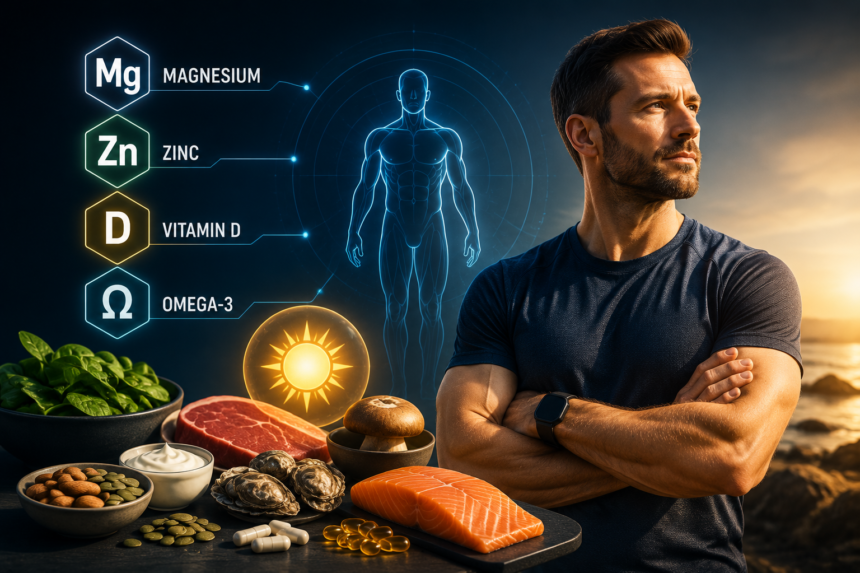
This guide covers magnesium, zinc, vitamin D, and omega-3 fatty acids — what each one does, how common deficiency actually is, the signs your body sends before things get bad, and a practical plan to fix it through food first and supplements second.
Why Micronutrients Get Ignored
Macronutrients are easy to track. Protein, carbs, and fat show up on every label, every app, every meal-prep spreadsheet. Micronutrients don’t get the same attention because you need them in milligrams or micrograms instead of grams, and a deficiency rarely announces itself with a single dramatic symptom. Instead it shows up as a slow accumulation of “off” — tired for no reason, harder recovery, a libido that’s quietly dropped, sleep that never feels deep.
Modern diets make this worse. Soil depletion has lowered the mineral content of produce over the last few decades, processed foods are stripped of what made the original ingredient nutritious, and indoor lifestyles cut off the one truly free source of vitamin D: sunlight. None of this shows up on a bathroom scale, which is exactly why it goes unaddressed for years.
Magnesium: The Mineral Behind Recovery and Sleep
Magnesium is involved in more than 300 enzymatic reactions in the body, including protein synthesis, muscle and nerve function, blood glucose control, and blood pressure regulation. For men who train, it’s also directly tied to how well you sleep and how completely you recover between sessions.
Why it matters specifically for men: Magnesium supports testosterone production and helps regulate cortisol, the stress hormone that — when chronically elevated — works directly against muscle growth and fat loss. If you’ve read our piece on testosterone booster foods, magnesium is one of the underlying mechanisms that makes several of those foods effective in the first place.
Signs you might be low:
- Muscle cramps or twitches, especially at night
- Trouble falling or staying asleep
- Persistent fatigue despite adequate sleep hours
- Headaches or increased stress reactivity
- Irregular heartbeat sensations
Best food sources: pumpkin seeds, almonds, spinach, black beans, dark chocolate (70%+), and avocado.
Practical target: 400–420 mg per day for adult men. If supplementing, magnesium glycinate is better absorbed and gentler on the stomach than magnesium oxide, and it’s the form most associated with sleep improvements.
Zinc: The Hormone and Immune Mineral
Zinc is essential for testosterone synthesis, immune function, and wound healing. It’s also lost through sweat, which makes active men more vulnerable to falling short than the general population — a detail almost never mentioned alongside the usual “eat more oysters” advice.
Why it matters specifically for men: Zinc deficiency has been directly linked to reduced testosterone levels and impaired sperm quality. Even a mild, sub-clinical deficiency — the kind that never shows up as an obvious illness — can measurably affect hormone output over time.
Signs you might be low:
- Frequent colds or slow-healing cuts
- Reduced appetite or a dulled sense of taste/smell
- Hair thinning
- Slower recovery from training
Best food sources: oysters, beef, pumpkin seeds, chickpeas, and cashews.
Practical target: 11 mg per day for adult men, and no more than 40 mg per day from supplements without medical supervision — excess zinc interferes with copper absorption and can backfire.
Vitamin D: The “Sunshine Hormone” Most Men Are Missing
Despite the name, vitamin D functions more like a hormone than a vitamin, and it’s arguably the most widespread deficiency among adult men, especially those who work indoors, live at higher latitudes, or simply wear sunscreen daily (which, correctly, we’d never tell you to stop doing).
Why it matters specifically for men: Vitamin D receptors exist throughout the reproductive system, and multiple studies have found a correlation between low vitamin D status and lower testosterone levels. It also plays a direct role in immune defense, bone density, and mood regulation — low levels are associated with higher rates of seasonal low mood.
Signs you might be low:
- Persistent fatigue, particularly in winter months
- Bone or joint aches
- Getting sick more often
- Low mood that tracks with shorter days
Best food sources: fatty fish (salmon, mackerel, sardines), egg yolks, and fortified foods. Realistically, food alone rarely covers it.
Practical target: 15–20 minutes of midday sun exposure on bare skin several times a week when possible, plus 1,000–2,000 IU of vitamin D3 daily for most men — though a blood test (25-hydroxyvitamin D) is the only way to know your actual level and whether you need more.
Omega-3s: The Anti-Inflammatory Fats You’re Probably Skipping
Most men eat plenty of omega-6 fats (found in vegetable oils and processed food) and almost no omega-3s, creating a ratio that promotes chronic low-grade inflammation — the kind that slows recovery, stiffens joints, and quietly works against your training goals.
Why it matters specifically for men: Omega-3 fatty acids (EPA and DHA) support cardiovascular health, reduce exercise-induced inflammation, and are increasingly studied for their role in cognitive function and mood. They also support healthy testosterone production indirectly, by keeping cortisol and systemic inflammation in check.
Signs you might be low:
- Joint stiffness that isn’t explained by training load
- Dry skin
- Difficulty concentrating
- Slower recovery between workouts
Best food sources: salmon, sardines, mackerel, walnuts, chia seeds, and flaxseed.
Practical target: at least two servings of fatty fish per week, or 1–2 grams of combined EPA/DHA daily from a fish oil or algae-based supplement if fish isn’t a regular part of your diet.
A Simple Weekly Checklist
Rather than trying to hit exact numbers every single day, aim for consistency across the week:
| Nutrient | Weekly Target | Easiest Food Source |
|---|---|---|
| Magnesium | ~2,800–2,900 mg/week | Pumpkin seeds, spinach, almonds |
| Zinc | ~77 mg/week | Beef, oysters, chickpeas |
| Vitamin D | Sun exposure 3–4x/week + supplement | Fatty fish, sunlight |
| Omega-3 | 2+ fatty fish meals/week | Salmon, sardines, walnuts |
Food First, Supplements Second
None of this is a pitch to fill a pillbox. Whole foods deliver these nutrients alongside fiber, other cofactor minerals, and compounds that supplements simply can’t replicate. The realistic approach is this: build meals around the food sources listed above, then use targeted supplementation to close the specific gaps a blood test or a pattern of symptoms points to — the same way you’d approach protein sources or creatine if you were optimizing training nutrition.
If you already have a solid protein strategy in place, layering in these four micronutrients is very often the next real lever — the one that shows up not in the mirror, but in how you sleep, how fast you recover, and how you feel on a random Tuesday afternoon.
FAQ
Can I get everything I need from food alone? For magnesium, zinc, and omega-3, a well-planned diet gets you close. Vitamin D is the exception — between limited sun exposure and few food sources, most men benefit from a modest daily supplement, ideally guided by a blood test.
Is it safe to take all four supplements together? Generally yes, at standard doses, but zinc and magnesium can compete for absorption if taken in very high amounts at the same time. Spacing them a few hours apart, or taking magnesium at night and zinc with a meal, avoids the issue.
How do I know if I actually need to supplement? Symptoms are a starting signal, not a diagnosis. A basic blood panel — including 25-hydroxyvitamin D — gives you an actual number to work from instead of guessing.
This article is for general informational purposes and isn’t a substitute for medical advice. See our Medical Disclaimer for details, and check with a doctor before starting any new supplement, especially if you take medication.