
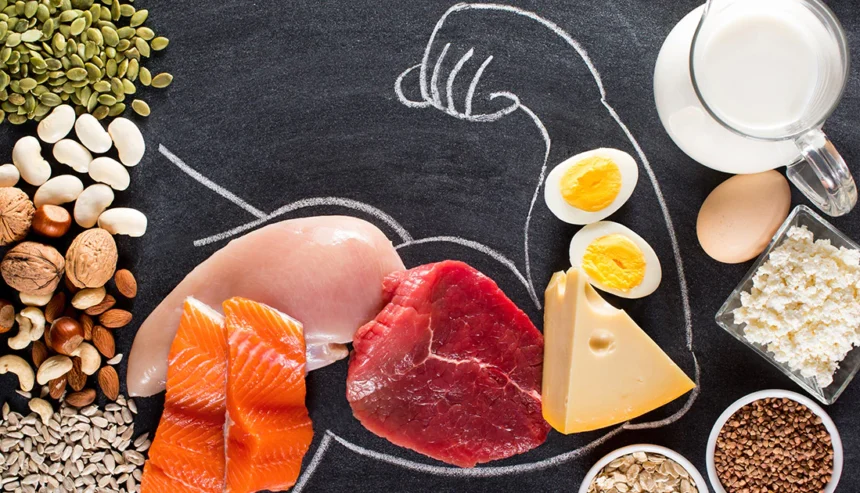
Protein is the single most important macronutrient for building muscle. Without adequate protein, your body cannot repair and grow muscle fibres after training — no matter how hard you work in the gym or how optimised your training programme is. But not all protein sources are created equal. They differ dramatically in their amino acid profile, bioavailability, digestibility, and practical usability.
In this guide, we rank the 15 best protein sources for muscle gain in 2026, based on scientific evidence, leucine content (the key muscle-building amino acid), and real-world effectiveness for men.
📊 The International Society of Sports Nutrition (2025) recommends 1.6 to 2.2g of protein per kg of body weight per day for maximising muscle growth in resistance-training men.
What Makes a Protein Source ‘Good’ for Muscle Gain?
Not all proteins have the same muscle-building potential. The key factors that matter are: a complete amino acid profile containing all 9 essential amino acids, high leucine content (leucine is the primary trigger for muscle protein synthesis), digestibility and absorption speed, and practical factors including cost, convenience, and palatability.
The 15 Best Protein Sources for Muscle Gain
1. Whey Protein Concentrate or Isolate
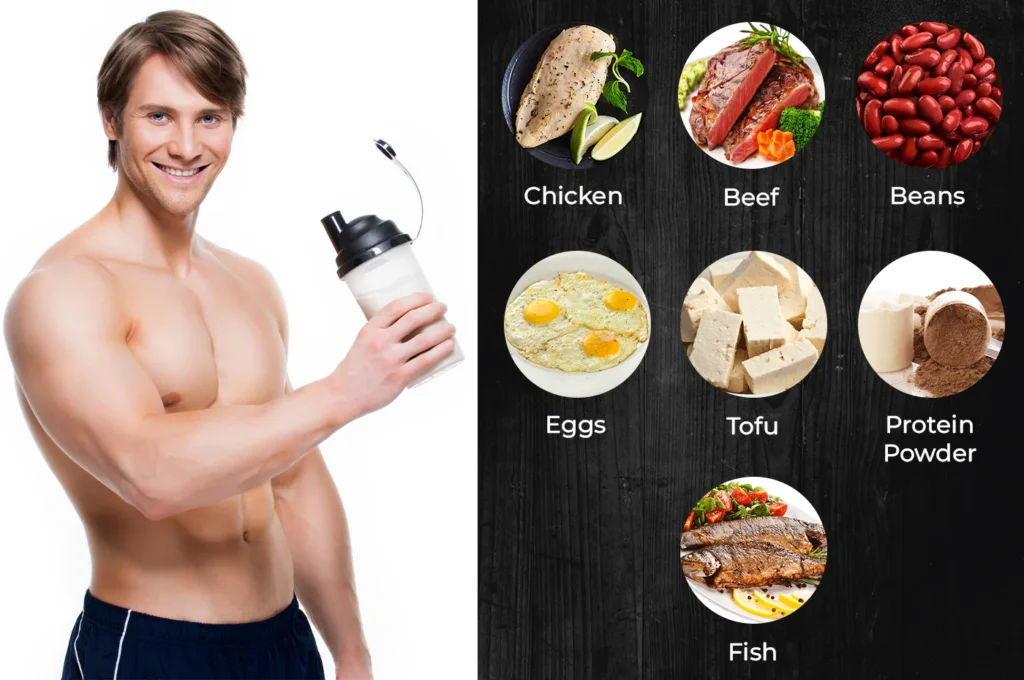
Whey protein is the gold standard for muscle building. It is derived from milk during the cheese-making process and contains the highest leucine content of any protein source — approximately 10 to 11% by weight. This rapid-digesting protein spikes muscle protein synthesis faster than any other source and is particularly effective when consumed within 1 to 2 hours of training.
Whey isolate is 90% or more protein by weight and is the better choice for men watching calories or with lactose sensitivity. Whey concentrate is 70 to 80% protein and is more cost-effective for most men.
💡 PRO TIP: For maximum muscle gain, consume 25 to 40g of whey protein within 30 to 60 minutes after training. Studies consistently show this window maximises muscle protein synthesis when combined with resistance exercise.
2. Chicken Breast
Chicken breast is the quintessential lean muscle-building food for good reason. A 100g serving provides approximately 31g of high-quality protein with minimal fat, making it calorie-efficient and easy to prepare in bulk quantities. It scores the maximum score of 1.0 on the PDCAAS scale — the gold standard for protein quality assessment.
3. Eggs
Eggs are considered the reference protein against which all others are measured. They have a biological value of 100 — meaning essentially all the protein in eggs is usable by the body. Each large egg contains approximately 6g of protein, with the yolk providing fat-soluble vitamins and cholesterol for testosterone production. Eating 4 to 6 whole eggs per day is a time-tested strategy used by serious athletes for decades.
4. Salmon
Salmon provides 25g of protein per 100g serving and adds omega-3 fatty acids — EPA and DHA — which have been independently shown to enhance muscle protein synthesis and reduce post-exercise inflammation. A 2025 study in the American Journal of Clinical Nutrition found that omega-3s enhanced the anabolic response to protein by up to 35% in resistance-training men.
5. Greek Yoghurt
Greek yoghurt contains both fast-digesting whey protein and slow-digesting casein protein, making it ideal as an evening snack before bed. The casein provides a slow, sustained release of amino acids overnight, supporting muscle repair during sleep. A 200g serving of full-fat Greek yoghurt contains 17 to 20g of protein alongside probiotics for gut health.
💡 PRO TIP: Add Greek yoghurt as your pre-bed snack. The slow-release casein feeds your muscles while you sleep — a key muscle-building advantage that many men overlook entirely.
6. Cottage Cheese
Cottage cheese is one of the highest casein protein foods available at any grocery store. A 200g serving delivers 25g of slow-digesting protein at very low cost. It is particularly effective when consumed before sleep for the same reasons as Greek yoghurt. Combine it with fruit, nuts, or cinnamon to improve the flavour.
7. Lean Beef
Lean beef provides 26g of protein per 100g and is one of the richest food sources of creatine — approximately 5g per kilogram of raw meat. Creatine is stored in muscle tissue and directly powers explosive strength, higher training volume, and greater muscle growth over time. Beef also provides zinc, vitamin B12, and iron — all critical for recovery, energy, and hormone production.
8. Canned Tuna in Water
Canned tuna is one of the most practical and cost-effective protein sources available worldwide. A 100g can of tuna packed in water provides 25 to 29g of protein and fewer than 120 calories. It is shelf-stable, ready to eat with no preparation required, and provides vitamin D and selenium alongside its high-quality complete protein.
9. Turkey Breast
Turkey breast is nutritionally similar to chicken breast — providing approximately 30g of protein per 100g — but with a slightly higher tryptophan content. Tryptophan is a precursor to serotonin and melatonin, which can improve sleep quality. Better sleep consistently means better recovery, which translates directly to more muscle growth over time.
10. Casein Protein Powder
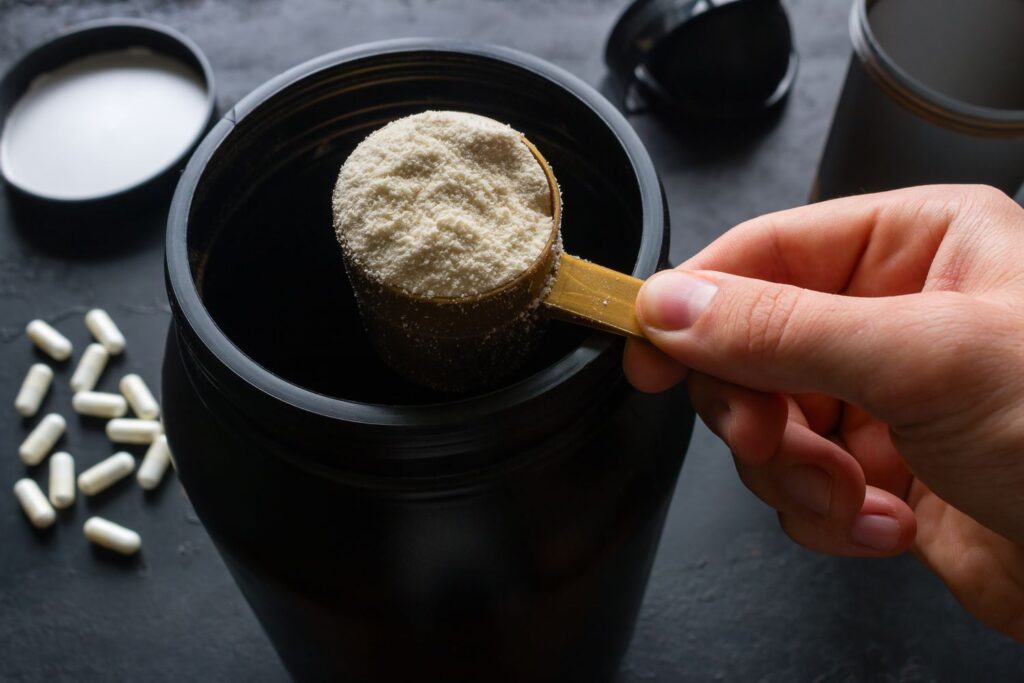
Casein protein powder is the slow-release cousin of whey. It forms a gel in the stomach and delivers amino acids over 5 to 7 hours rather than 60 to 90 minutes like whey. This makes it ideal for preventing muscle breakdown during extended fasting — particularly overnight. Many serious gym-goers take 40g of casein before bed as part of their muscle-building protocol.
11. Edamame — Soybeans
For plant-based protein, edamame is in a league of its own. A 200g serving provides 18g of complete protein — including all 9 essential amino acids, which is exceptionally rare for plant sources. Soy protein has a PDCAAS score of 1.0, equal to animal proteins. Concerns about soy’s estrogenic effects have been largely debunked — normal consumption of 1 to 2 servings per day does not meaningfully affect testosterone in men.
12. Lentils
Lentils provide 18g of protein per cooked cup alongside a significant amount of fibre, folate, and iron. They are not a complete protein on their own — they lack sufficient methionine — but combining them with a rice dish provides all essential amino acids at a fraction of the cost of animal proteins.
13. Tempeh
Tempeh is fermented soy — and fermentation significantly improves its digestibility and bioavailability compared to tofu. A 100g serving provides 19g of protein along with probiotics, manganese, and calcium. Its dense, firm texture makes it a satisfying meat alternative that absorbs flavours well in cooking.
14. Shrimp
Shrimp are exceptionally high in protein per calorie — 24g of protein per 100g with only 99 calories. They also provide iodine for thyroid function and metabolic rate, and astaxanthin — an antioxidant that reduces muscle damage and post-exercise inflammation. A simple shrimp stir-fry is one of the leanest, highest-quality protein options available.
15. Pumpkin Seeds
Pumpkin seeds are the plant-based protein secret weapon. A 30g serving provides 9g of protein along with zinc, magnesium, and iron — all critical for testosterone and muscle recovery. They make an excellent protein-boosting snack between meals or a nutritious topping for salads, oatmeal, and yoghurt.
How Much Protein Do You Actually Need?
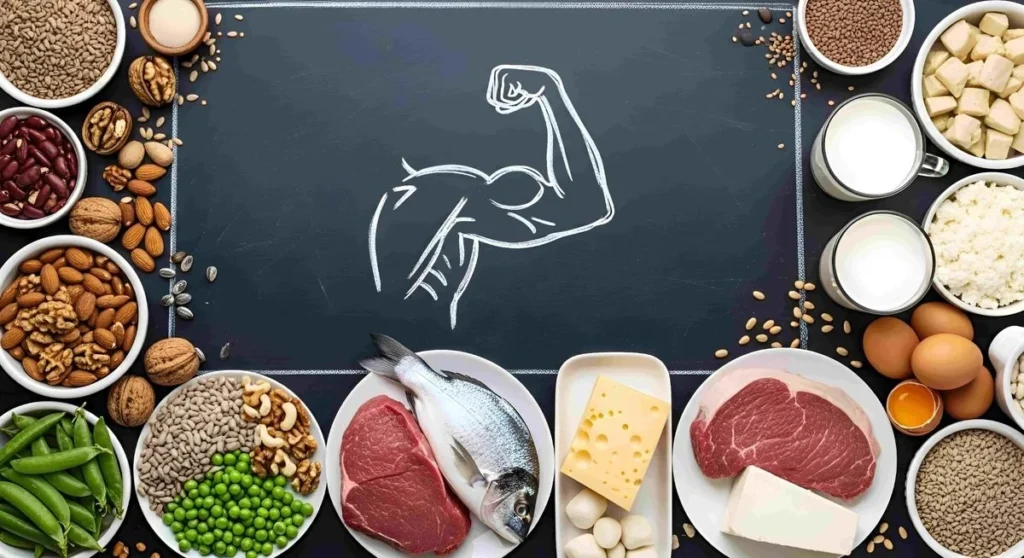
The ISSN (2025) recommends 1.6 to 2.2g of protein per kilogram of bodyweight per day for men actively trying to build muscle. For an 80kg man, that translates to 128 to 176g of protein per day. Distribute this across 4 to 6 meals or protein-containing eating occasions throughout the day for optimal muscle protein synthesis.
- Lean bulking phase (building muscle): 2.0 to 2.2g per kg bodyweight
- Cutting phase (preserving muscle while losing fat): 2.2 to 3.0g per kg bodyweight
- Maintenance (maintaining current muscle): 1.6 to 1.8g per kg bodyweight
Frequently Asked Questions
Q: Is animal protein better than plant protein for muscle gain?
A: Animal proteins generally have a superior amino acid profile, higher leucine content, and better bioavailability. However, a well-planned plant-based diet can absolutely support meaningful muscle growth. The key is consuming sufficient total protein and combining complementary plant proteins to ensure all essential amino acids are present throughout the day.
Q: Can you eat too much protein?
A: For healthy men with functioning kidneys, consuming up to 3g of protein per kg of bodyweight daily has not been shown to cause harm in clinical studies. The claim that excessive protein damages kidneys applies only to people with pre-existing kidney disease, not healthy individuals.
Q: Is protein timing important for muscle gain?
A: Protein timing matters, but total daily intake matters more. Consuming 25 to 40g of protein within 1 to 2 hours of training optimises the acute muscle protein synthesis response. Beyond that, distributing protein evenly across 4 to 6 meals is more effective than consuming all your daily protein in 1 or 2 large meals.
🔗 Enjoyed this article? Explore more expert guides at mensbuddy.com — your complete resource for men’s health, fitness, grooming, and lifestyle.