
The push pull legs (PPL) workout split is widely regarded as one of the most effective training programmes for building muscle and strength — and it is perfectly suited for beginners who are ready to commit to a structured, progressive programme. It trains every major muscle group twice per week, provides ideal recovery time between sessions, and scales seamlessly with your progress as you advance from beginner to intermediate level.
This complete guide includes the science behind the split, a full 6-day programme with exercises, sets, reps, and rest times, plus essential advice on progressive overload — the real driver of muscle growth.
📊 A 2025 meta-analysis in the Journal of Strength and Conditioning Research found that training each muscle group twice per week produces 48% more muscle growth than training each muscle group once per week at the same total volume.
What Is the Push Pull Legs Split?
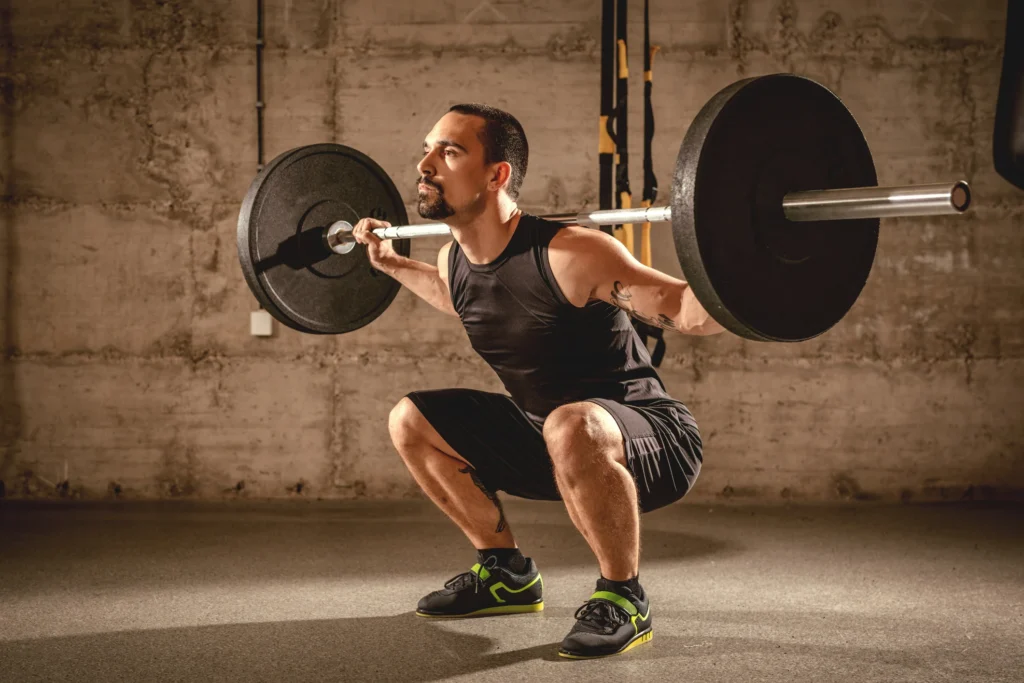
The push pull legs split divides your training into three movement-pattern categories rather than individual muscles:
- Push Day: All exercises that push weight away from your body — chest, shoulders, and triceps
- Pull Day: All exercises that pull weight toward your body — back, biceps, and rear deltoids
- Legs Day: All lower body work — quadriceps, hamstrings, glutes, and calves
By running this three-day cycle twice per week — six training days total with one rest day — you train each muscle group twice, which research consistently identifies as the optimal frequency for hypertrophy (muscle growth) in natural, drug-free lifters.
Why PPL Is Perfect for Beginners
Many beginner programmes such as full-body 3-times-per-week routines are excellent for the first 8 to 12 weeks, but they quickly limit muscle growth because they do not provide enough total training volume per muscle group as you get stronger. The PPL split solves this by dedicating entire sessions to related movement patterns, allowing significantly higher volume with appropriate recovery built into the schedule.
The Complete 6-Day Push Pull Legs Workout Plan for Beginners
Day 1 — Push: Chest, Shoulders, and Triceps
- Barbell or Dumbbell Bench Press — 4 sets x 8 to 10 reps — 2 minutes rest between sets
- Incline Dumbbell Press — 3 sets x 10 to 12 reps — 90 seconds rest
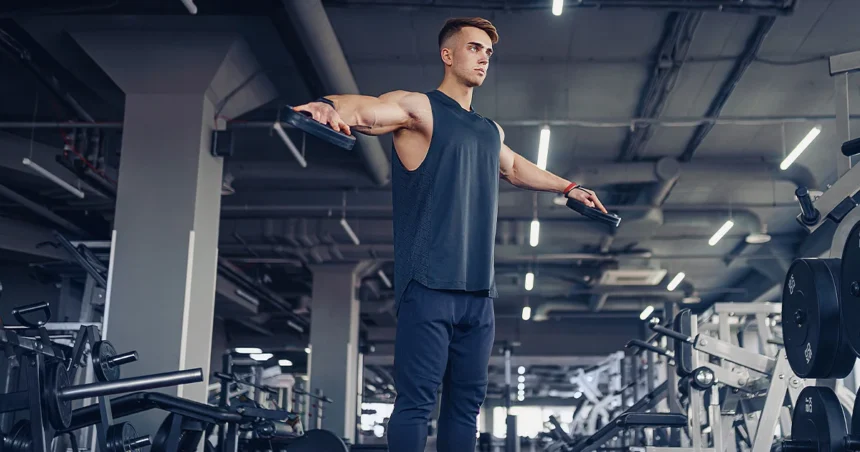
- Dumbbell Lateral Raises — 3 sets x 12 to 15 reps — 60 seconds rest
- Overhead Dumbbell Press — 3 sets x 8 to 10 reps — 90 seconds rest
- Tricep Pushdowns (cable or resistance band) — 3 sets x 12 to 15 reps — 60 seconds rest
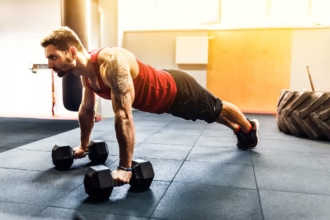
- Close-Grip Push-Ups — 2 sets to technical failure — 60 seconds rest
Day 2 — Pull: Back, Biceps, and Rear Deltoids
- Pull-Ups or Assisted Pull-Ups or Lat Pulldowns — 4 sets x 6 to 10 reps — 2 minutes rest
- Barbell or Dumbbell Bent-Over Row — 4 sets x 8 to 10 reps — 2 minutes rest
- Seated Cable Row — 3 sets x 10 to 12 reps — 90 seconds rest
- Face Pulls with cable or band — 3 sets x 15 reps — 60 seconds rest
- Barbell or Dumbbell Bicep Curls — 3 sets x 10 to 12 reps — 90 seconds rest
- Hammer Curls — 2 sets x 12 reps — 60 seconds rest
Day 3 — Legs: Quads, Hamstrings, Glutes, and Calves
- Barbell Back Squat or Goblet Squat — 4 sets x 8 to 10 reps — 2 to 3 minutes rest
- Romanian Deadlift — 3 sets x 10 reps — 2 minutes rest
- Leg Press — 3 sets x 12 reps — 90 seconds rest
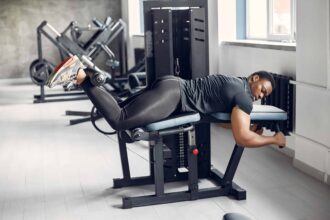
- Lying or Seated Leg Curls — 3 sets x 12 to 15 reps — 90 seconds rest
- Walking Lunges — 2 sets x 20 steps total — 90 seconds rest
- Standing Calf Raises — 4 sets x 15 to 20 reps — 60 seconds rest
Day 4 — Active Rest
Take a full rest day or engage in light active recovery: a 30-minute walk, gentle stretching, or a yoga session. No weight training. Prioritise 7 to 9 hours of sleep. Eat at or slightly above your protein target to support muscle repair from the first three training days.
Day 5 — Push: Chest, Shoulders, and Triceps (Variation)
- Flat Dumbbell Press — 4 sets x 10 reps
- Cable Chest Flyes or Pec Deck — 3 sets x 12 to 15 reps
- Arnold Press — 3 sets x 10 reps
- Front Plate Raises — 3 sets x 12 reps
- Overhead Tricep Extension — 3 sets x 12 reps
- Bench Tricep Dips — 3 sets to technical failure
Day 6 — Pull: Back, Biceps, and Rear Deltoids (Variation)
- Conventional Deadlift — 3 sets x 5 reps heavy — 3 minutes rest between sets
- Single-Arm Dumbbell Row — 3 sets x 10 reps each side — 90 seconds rest
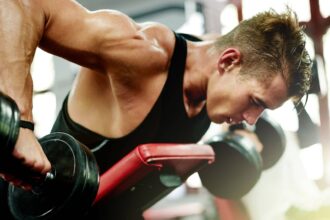
- Chest-Supported Dumbbell Row — 3 sets x 12 reps
- Straight-Arm Cable Pulldown — 3 sets x 15 reps
- Concentration Curls — 3 sets x 12 reps
- Reverse Barbell Curls — 2 sets x 15 reps
Day 7 — Legs: Quads, Hamstrings, Glutes, and Calves (Variation)
- Front Squat or Hack Squat — 4 sets x 8 reps
- Sumo Deadlift — 3 sets x 8 reps
- Bulgarian Split Squat — 3 sets x 10 reps each leg
- Leg Extension — 3 sets x 15 reps
- Barbell Hip Thrusts or Glute Bridges — 4 sets x 12 reps
- Seated Calf Raises — 3 sets x 20 reps
How to Apply Progressive Overload
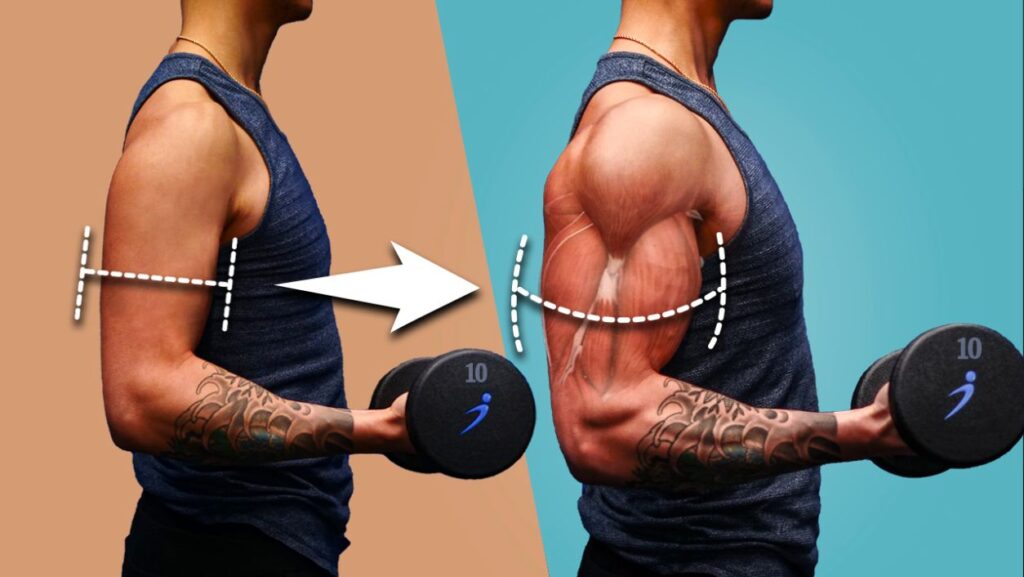
Progressive overload is the fundamental driver of muscle growth in the gym. It means consistently increasing the challenge placed on your muscles over time. Without progression, your body adapts within weeks and muscle growth stalls completely. The simplest and most effective method: add 2.5kg to your compound lifts — bench press, squat, deadlift, overhead press, and row — every time you successfully complete all prescribed sets and reps with good technique.
Track every single training session in a notebook or training app. You cannot systematically progress what you do not measure.
💡 PRO TIP: Beginners experience the fastest strength gains of their lifting career — a period known as “newbie gains.” Take advantage of this window by increasing weights consistently every 1 to 2 weeks, even when it feels almost too soon to progress. This momentum builds the habit of progressive overload that will serve you for years.
Frequently Asked Questions
Q: How long should I follow the PPL split as a beginner?
A: Run the beginner PPL plan for at least 12 to 16 weeks before making significant programme changes. After that period, you can increase volume, introduce more advanced exercises, or transition to a more specialised programme. Consistency over 16 weeks produces far more results than constantly switching programmes every 4 weeks.
Q: Can I do the PPL split with only dumbbells at home?
A: Yes. Every exercise in this plan has an effective dumbbell substitute. Dumbbell-only training is slightly less optimal for maximum absolute strength development but produces excellent muscle growth results and is entirely suitable for home gym or travel training environments.
Q: What should I eat on the PPL programme to build muscle?
A: Aim for a modest caloric surplus of 200 to 300 calories above your maintenance intake, with 1.8 to 2.2g of protein per kg of bodyweight distributed across 4 or more meals per day. This combination of training stimulus and nutritional support is what actually produces visible muscle growth over 12 to 16 weeks.
🔗 Enjoyed this article? Explore more expert guides at mensbuddy.com — your complete resource for men’s health, fitness, grooming, and lifestyle.