
| The tricep pull down — also called the tricep pushdown — is one of the most popular exercises you will find in any gym. It is simple to do, easy on the joints, and incredibly effective at isolating and building the tricep muscles. But most men do it wrong, which means they are leaving serious gains on the table. This guide will show you the exact technique to follow, the mistakes to avoid, and the best variations to add to your routine. |
Whether you are just starting your fitness journey or you have been training for years, getting the most from this exercise can make a real difference to the size and definition of your arms. At MensBuddy, we are all about giving men practical, no-nonsense advice — and that is exactly what you will get here.
What Is the Tricep Pull Down?
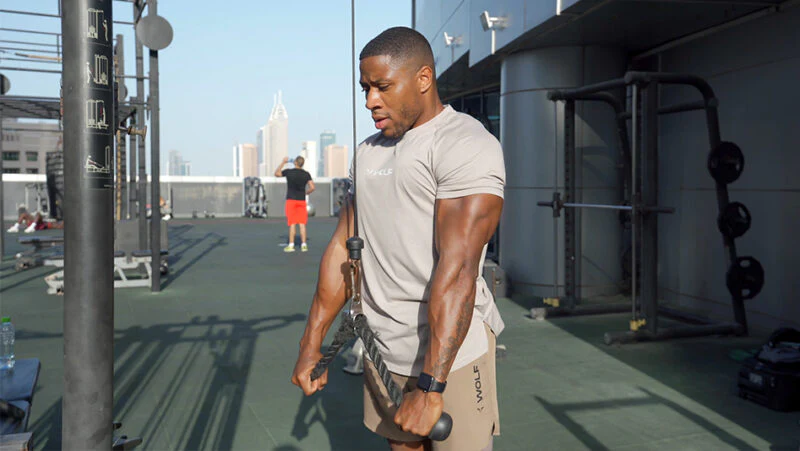
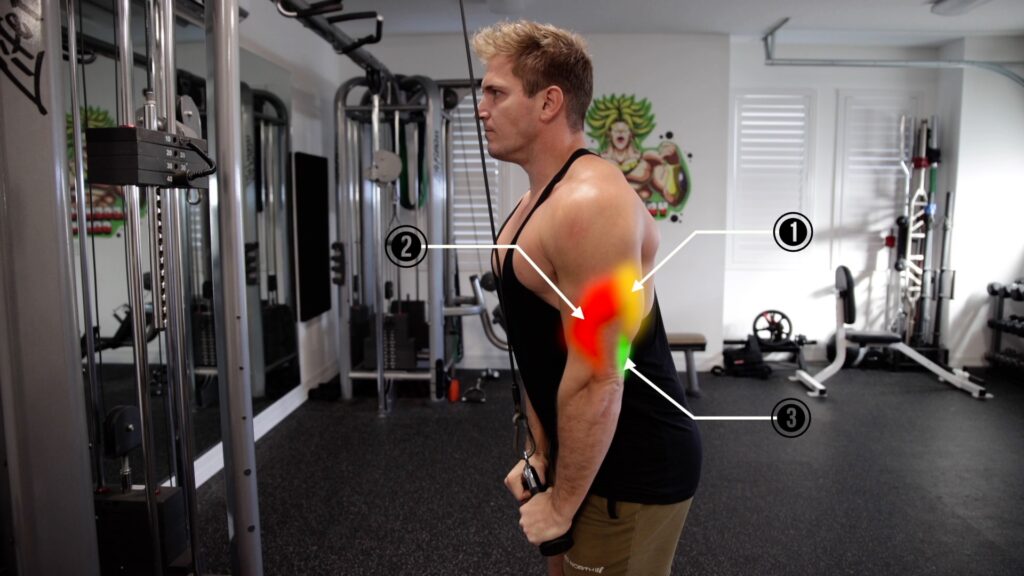
The tricep pull down is a cable machine exercise that works the three heads of the tricep muscle — the long head, the lateral head, and the medial head. It is performed using a cable pulley set at the top of the machine, with you pulling an attachment downward against the resistance of the cable stack.
The reason this exercise is so popular is that it keeps constant tension on your tricep throughout the entire movement. Unlike free weight exercises where tension changes depending on the angle, the cable machine maintains steady resistance from start to finish. This is one of the reasons the tricep pull down is such an effective exercise for building muscle size.
You might also hear this exercise called the tricep pushdown, tricep cable pulldown, or straight bar pushdown. They all refer to the same basic movement — pulling a cable attachment downward to fully extend and contract the tricep.
How to Do the Tricep Pull Down with Perfect Form
Step-by-Step Technique
Start by setting up a cable machine with the pulley at the top position. Attach either a straight bar, an EZ-bar, a rope, or a V-bar to the cable. Stand facing the machine with your feet about shoulder-width apart. You can stand with one foot slightly in front of the other for balance.
Grip the attachment with both hands using an overhand grip — palms facing downward for a straight bar, or palms facing each other if you are using a rope. Your elbows should be tucked in close to your sides and bent at roughly 90 degrees at the start of the movement.
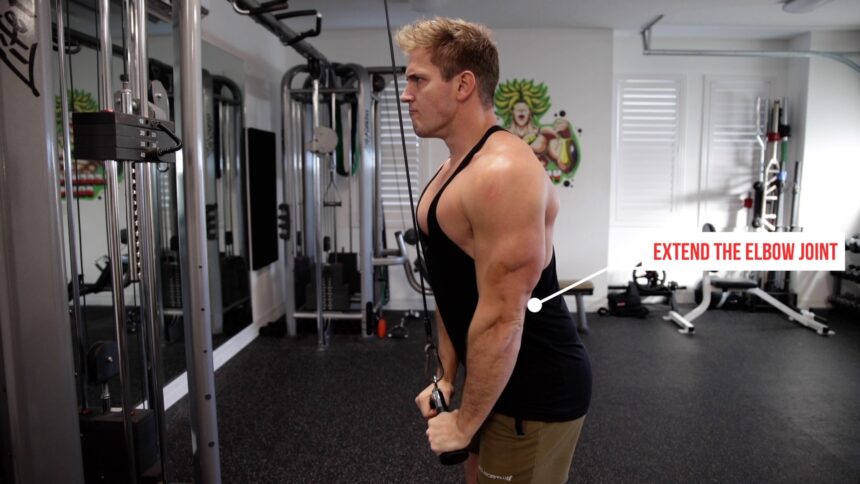
Now push the attachment downward in a smooth, controlled arc until your arms are fully extended and your triceps are completely contracted. Pause for a brief moment at the bottom and squeeze the tricep hard. Then slowly allow the weight to rise back up to the starting position while maintaining control. That is one rep.
| Pro Tip: Keep your elbows locked at your sides throughout the entire movement. If your elbows are drifting forward or backward, you are likely using too much weight. Drop the weight and focus on form first. |
Key Form Points to Remember
Your back should stay straight and your core should be lightly braced throughout. Avoid leaning too far forward or hunching your shoulders. The movement should only happen at the elbow joint — your upper arms stay still while your forearms do all the work.
Breathe out as you push down and breathe in on the way back up. Do not rush through the reps. A controlled, deliberate tempo — about 2 seconds down and 2 seconds back up — will do far more for your tricep growth than throwing the weight around quickly.
Common Mistakes to Avoid
Using Too Much Weight
This is the number one mistake men make on this exercise. When the weight is too heavy, you cannot isolate the tricep properly. You end up using your shoulders, your back, and your whole body to move the weight. Drop the ego, lower the weight, and feel the burn in your triceps where it belongs.
Letting Your Elbows Flare Out
If your elbows drift away from your body during the movement, you start recruiting your shoulders and chest to help. This takes the focus away from the triceps. Think of your elbows as hinges that are nailed to your ribcage — they should not move at all.
Not Fully Extending at the Bottom
A lot of guys stop the movement a few inches short of full extension. This is a mistake because the peak contraction of the tricep happens when your arms are fully straightened. Take the weight all the way down, squeeze hard, and you will feel a much stronger burn.
Rushing Through Reps
Speed is the enemy of muscle growth on isolation exercises. Slow down, control the negative portion of the lift on the way back up, and your triceps will get a much harder workout — even with lighter weight.
| Quick Fix: If you can do more than 20 reps easily, the weight is too light. If you struggle to reach 8 clean reps, the weight is too heavy. Aim for a weight where 10 to 15 reps feel challenging but doable with perfect form. |
Best Tricep Pull Down Variations
Once you have the basic technique down, adding some variation to your tricep training is a great way to hit the muscles from different angles and keep your workouts interesting.
Rope Tricep Pulldown
Using a rope attachment instead of a straight bar allows you to spread your hands slightly apart at the bottom of the movement, which increases the range of motion and places a slightly greater stretch on the long head of the tricep. Many lifters find the rope version feels more natural on their wrists and elbows too.
Reverse Grip Tricep Pulldown
By flipping your grip to an underhand position — palms facing up — you shift more emphasis onto the medial head of the tricep. This variation can feel awkward at first but is worth including occasionally to ensure you are developing all three heads of the muscle evenly.
Single Arm Tricep Pulldown
Doing the movement one arm at a time allows you to identify and address any strength imbalances between your left and right side. It also forces more core stability and is a great way to really focus on the mind-muscle connection in each tricep.
| Exercise | Sets & Reps | Equipment |
|---|---|---|
| Tricep Pushdown (Cable) | 3–4 sets × 10–15 reps | Cable machine, rope or bar |
| Overhead Tricep Extension | 3 sets × 10–12 reps | Dumbbell or EZ-bar |
| Skull Crushers | 3 sets × 8–12 reps | EZ-bar or dumbbells |
| Tricep Dips | 3 sets × 12–15 reps | Parallel bars or bench |
| Close-Grip Bench Press | 3–4 sets × 8–10 reps | Barbell |
How to Program the Tricep Pull Down in Your Workout
The tricep pull down works best as an isolation exercise toward the end of a push day or an arm day — after your heavy compound pressing movements like bench press or overhead press. Doing heavy compounds first means your triceps are already warmed up and you can safely go heavier on the isolation work.
For most men, 3 to 4 sets of 10 to 15 reps is the sweet spot for building tricep size. If strength is your main goal, you can work in slightly lower rep ranges of 6 to 10 reps with heavier weight. Performing the exercise twice per week — once on your push day and once on a dedicated arm day — will give your triceps enough stimulation to grow without overtraining them.
Remember that the triceps make up roughly two thirds of your total upper arm size. If you want bigger arms, prioritising tricep training is essential. Most men focus too much on biceps and neglect their triceps, which is a mistake when the tricep is the larger of the two muscle groups.
| Want more expert fitness guides for men?Visit MensBuddy.com for workout plans, nutrition tips, and everything men need to stay fit and strong. |
Frequently Asked Questions
What is the difference between a tricep pull down and a tricep pushdown?
They are the same exercise. Some people call it a pull down because you are pulling a cable attachment toward you, while others call it a pushdown because the motion feels like you are pushing the attachment downward. Both names refer to the same cable tricep isolation movement.
Is the tricep pull down better with a straight bar or a rope?
Both are excellent choices. A straight bar allows you to use slightly more weight and targets all three tricep heads evenly. A rope attachment gives a greater range of motion at the bottom and can feel easier on the wrists. It is a good idea to rotate between both for a well-rounded tricep workout.
How many sets of tricep pull downs should I do per workout?
For most men, 3 to 4 sets of 10 to 15 reps per session is ideal for building tricep size. You do not need to do excessive volume — 3 to 4 well-executed sets with proper form and adequate effort will produce excellent results when done consistently.
Can I do tricep pull downs every day?
It is not recommended. Like any muscle, your triceps need 48 to 72 hours of rest to recover and grow after an intense workout. Training them every day would not allow enough recovery time and could actually slow down your progress. Two sessions per week is the optimal frequency for most men.
Will tricep pull downs make my arms look bigger?
Yes, absolutely. The tricep makes up about two thirds of your total upper arm mass. Building bigger, stronger triceps has a greater impact on overall arm size than bicep training. Consistent tricep pull down training, combined with a good diet and enough protein, will noticeably increase the size and definition of your arms over time.
What weight should I start with for tricep pull downs?
Start lighter than you think you need to. A weight where you can perform 12 to 15 reps with perfect form and feel a real burn in your triceps — not your shoulders or back — is the right starting point. From there, add weight gradually as you get stronger.