

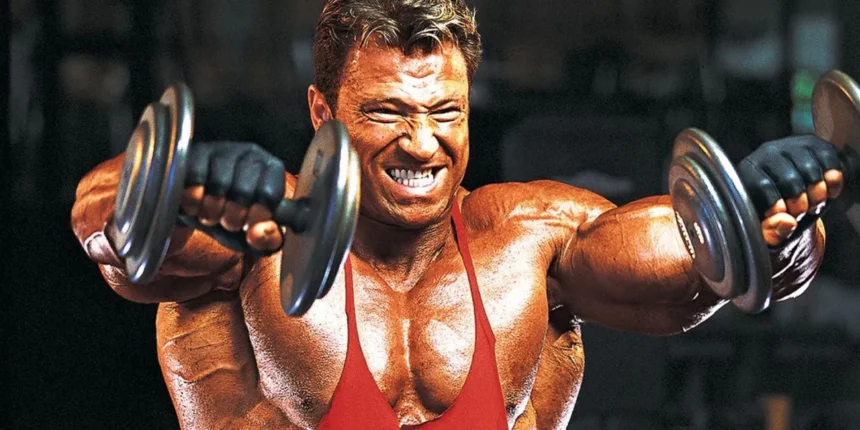
| If you want broader, stronger-looking shoulders, the dumbbell front raise is one of the best exercises you can add to your routine. It targets the front part of your shoulder — the anterior deltoid — and when done correctly it helps you build that full, round shoulder shape that most men are after.In this complete guide, we cover exactly how to perform the dumbbell front raise, what muscles it works, the most common mistakes to avoid, and how to fit it into your programme for maximum results. |
Whether you are just starting out or have been training for years, this movement deserves a place in your shoulder day. Let’s get into everything you need to know.
What is the Dumbbell Front Raise?
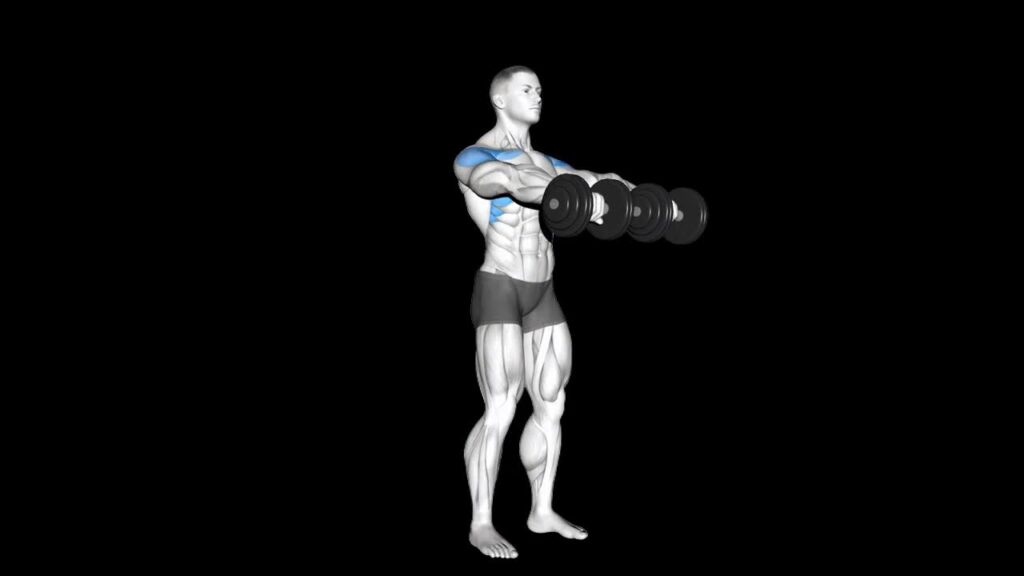
The dumbbell front raise is a shoulder isolation exercise where you hold a dumbbell in each hand and raise both arms straight out in front of you up to shoulder height. It specifically targets the anterior deltoid — the front head of the shoulder muscle — along with some activation in the upper chest and upper trapezius.
Unlike a compound pressing movement like the overhead press, the front raise does not involve bending the elbow. It is a pure lifting movement that creates a focused burn right at the front of the shoulder. This makes it an excellent finishing movement at the end of a shoulder session, or a great accessory exercise to pair with pressing work.
The exercise can be done with both arms at the same time, one arm at a time in an alternating fashion, or even with a single dumbbell held in both hands. Each variation has its own benefits, which we will cover further in this guide.
Muscles Worked by the Dumbbell Front Raise
Understanding which muscles this exercise targets helps you programme it intelligently and understand why it deserves a regular spot in your training plan.
| Muscle | Role in the Exercise | Activation Level |
| Anterior Deltoid (Front Shoulder) | Primary mover | Very High |
| Medial Deltoid (Side Shoulder) | Secondary support | Moderate |
| Upper Pectoralis Major | Assists with the lift | Low to Moderate |
| Trapezius (Upper) | Stabilises the scapula | Low |
| Serratus Anterior | Stabilises shoulder blade | Low |
The front deltoid is the star of the show here. If your goal is to build a well-rounded, full shoulder that looks impressive from every angle, you need to train all three heads of the deltoid — front, side, and rear. The dumbbell front raise takes care of the front head, while lateral raises target the side and face pulls or reverse flies target the rear.
How to Do the Dumbbell Front Raise: Step-by-Step
Technique matters a great deal with this exercise. Doing it with poor form not only reduces results — it also puts unnecessary strain on your shoulder joints and lower back. Follow these steps carefully every single rep.
Starting Position
Stand with your feet about shoulder-width apart and hold a dumbbell in each hand. Your palms should face your thighs at the starting position. Stand tall with your chest up and your core braced. Avoid rounding your shoulders forward or letting your lower back arch excessively. Think of this as your neutral, athletic stance before the lift begins.
The Lifting Phase
Keeping both arms straight — with just a very slight bend at the elbow to protect the joint — raise both dumbbells directly in front of you. Breathe out as you lift. Your arms should travel in a straight line upward until they are roughly parallel to the floor, at shoulder height. Pause briefly at the top of the movement.
| Key Tip: Do not raise the dumbbells above shoulder height. Going higher shifts the load away from the deltoid and increases the risk of shoulder impingement over time. Shoulder-height is your ceiling, every rep. |
The Lowering Phase
Lower the dumbbells back down slowly and under full control. This lowering phase — called the eccentric phase — is where a lot of the actual muscle-building stimulus happens. Do not drop the weight back down quickly. Aim for a 2 to 3 second lowering tempo. Return to the starting position and repeat for your desired number of repetitions.
| Pro Tip: Keep a very slight forward lean of around 10 degrees during the movement. This keeps constant tension on the anterior deltoid throughout the rep rather than having the weight ‘rest’ at the bottom position. |
Common Mistakes to Avoid
The dumbbell front raise looks simple, but there are several mistakes that are extremely common — especially among beginners. Avoiding these will make the exercise significantly safer and far more effective.
Using Too Much Weight
This is the number one mistake. When the dumbbells are too heavy, your body naturally starts to swing and use momentum — rocking the torso forward and backward to get the weight up. This takes the focus completely off the shoulder and puts a lot of stress on the lower back. Start lighter than you think you need to. Most men who think they need 15 kg dumbbells for this exercise could get far better results with 8 kg and strict, controlled form.
Raising the Arms Too High
Bringing the arms above shoulder height is a common error that many lifters do not even realise they are making. Beyond the horizontal position, the mechanics change and shoulder impingement risk increases noticeably. Stop at shoulder level every single rep — no higher. Quality over range.
Not Controlling the Lowering Phase
Dropping the weights back down quickly wastes half of the exercise. The eccentric — or lowering — portion of the rep is equally important for muscle growth. Take 2 to 3 seconds to lower the dumbbells back to the starting position on every single rep. This controlled lowering is what actually breaks down the muscle fibres and triggers growth.
Locking the Elbows
Raising with completely locked-out, rigid straight arms puts significant stress on the elbow joint over time. Keep a soft, slight bend in the elbows throughout the movement. This small adjustment protects the joint without reducing shoulder activation at all.
Dumbbell Front Raise Variations
Once you have mastered the basic version with both arms simultaneously, there are several useful variations to explore. Each one has slightly different benefits and can help add variety and new stimulus to your shoulder training.
Alternating Dumbbell Front Raise
Instead of raising both arms at the same time, you alternate — raise the right arm, lower it, then raise the left arm. This version gives each shoulder a brief rest between reps, allowing you to maintain better form and control for longer sets. It is particularly useful for beginners who are still learning the movement pattern.
Single Dumbbell Front Raise (Both Hands)
Hold one dumbbell with both hands at the centre and raise it straight out in front of you. This is a great option when you want to use a slightly heavier weight but still maintain good form and balance. It is also a nice variation to introduce when your bilateral version starts to feel stale.
Seated Dumbbell Front Raise
Performing the exercise seated on a flat bench completely eliminates the temptation to use body swing and momentum. If you notice yourself rocking when standing, move to the seated version. It forces strict form on every single rep with no cheating possible.
Incline Bench Front Raise
Set an incline bench to about 45 degrees and lie chest-down on it. Perform the front raise from this position. This variation pre-stretches the anterior deltoid at the bottom of the movement and creates a greater range of motion, producing more muscle tension throughout the entire exercise.
How to Programme the Dumbbell Front Raise

The front raise is best used as an isolation accessory exercise — not as the cornerstone of your shoulder session. Here is how to include it effectively depending on your training goal.
| Training Goal | Sets | Rep Range |
| Muscle Building | 3 – 4 | 10 – 15 reps |
| Muscular Endurance | 3 | 15 – 20 reps |
| Strength | 4 – 5 | 6 – 10 reps |
| Beginner | 2 – 3 | 12 – 15 reps |
Ideally, perform the dumbbell front raise after your heavy compound pressing work — like the overhead press or Arnold press — when your shoulders are already warmed up but not yet fully fatigued. Use it as one of your 2 to 3 isolation exercises near the end of your shoulder session.
Training frequency matters too. For most men, hitting the front delts twice per week produces the best growth stimulus alongside adequate recovery time. A typical setup might have shoulders on Monday and Thursday, with front raises appearing in both sessions at a moderate volume of 3 sets each.
As you get stronger and more experienced, do not simply add more sets. Instead, focus on increasing the weight used or the rep count — this is progressive overload in action, and it is the primary driver of long-term shoulder development. Check out more training guides at
MensBuddy.com to keep building on your progress with structured plans.
| Want More Shoulder & Training Guides?Visit MensBuddy.com for free expert guides on training, nutrition, and men’s health. |
Frequently Asked Questions
How heavy should the dumbbells be for a front raise?
Start lighter than you think you need to. For most men, a weight that allows 12 to 15 clean reps with strict form is ideal. If you find yourself swinging or using momentum, the weight is too heavy. A common starting point is 5 to 8 kg for beginners, and 10 to 15 kg for more experienced lifters.
How many reps and sets should I do?
For muscle building, 3 to 4 sets of 10 to 15 reps works very well. For endurance and shoulder conditioning, push up to 15 to 20 reps with a lighter weight. Always prioritise clean form over chasing higher rep numbers.
Is the dumbbell front raise bad for your shoulders?
When done with correct form and appropriate weight, the dumbbell front raise is safe for most people. The two most important rules are: do not raise above shoulder height, and always control the lowering phase. People with existing shoulder impingement or rotator cuff injuries should consult a physiotherapist before including this exercise in their routine.
Should I do front raises before or after the overhead press?
Always perform compound pressing movements like the overhead press before isolation exercises like the front raise. Your heavy compound lifts require the most strength and stability, so do them while your shoulders are fresh. Front raises work best near the end of your session as a finisher.
Can I replace lateral raises with front raises?
No. Lateral raises and front raises target different parts of the shoulder. The front raise works the anterior deltoid, while the lateral raise works the medial deltoid. For complete shoulder development, you need both — along with rear delt work like face pulls or reverse flies.
How often should I do the dumbbell front raise per week?
Training the anterior deltoid twice per week is the sweet spot for most men. It provides enough stimulus for growth with adequate recovery time between sessions. If your front delts are already heavily worked through bench pressing and other chest exercises, once a week may be sufficient.