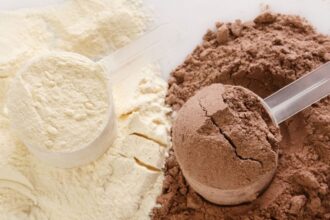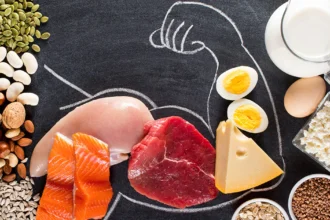

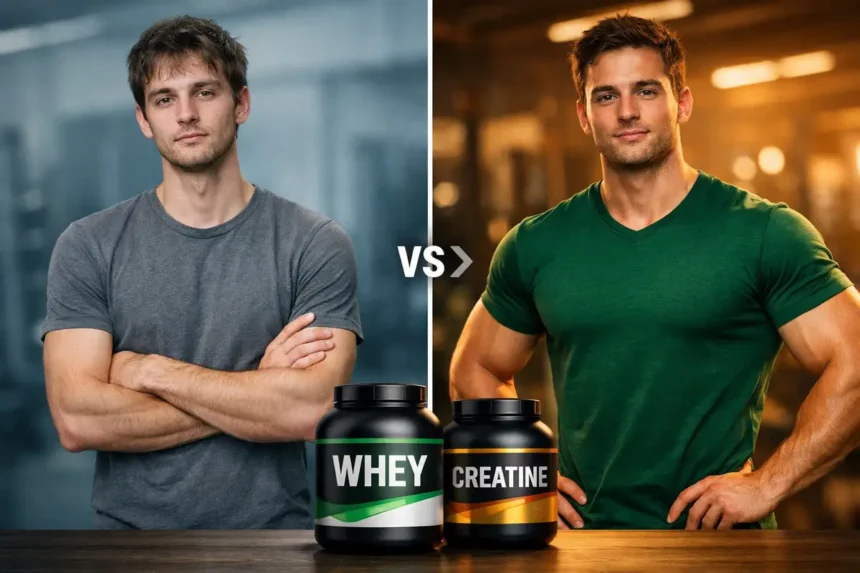
“Should I take creatine or protein?” is one of the most frequently asked questions in men’s fitness. The short answer: they are not in competition with each other — they serve completely different biological purposes. But understanding exactly what each supplement does, who benefits most from each, and whether you need both is essential before spending your money on either.
In this complete creatine vs protein breakdown, we explain the science behind both supplements, compare them head-to-head across the metrics that matter most to men, and give you a clear, goal-specific recommendation on exactly which one to prioritise for your situation in 2026.
📊 The global sports supplement industry was valued at $45.8 billion in 2025 (Grand View Research). Protein powder and creatine are consistently the two best-selling categories by revenue — for good reason.
What Is Creatine and How Does It Work?
Creatine is a naturally occurring organic compound produced in the liver from the amino acids arginine, glycine, and methionine. It is stored in muscle tissue as phosphocreatine, where it serves as a rapid energy currency for explosive, short-duration efforts — weightlifting, sprinting, jumping, and any other high-intensity activity lasting fewer than 10 seconds per effort.
When you supplement with creatine monohydrate — the best-studied, most affordable, and most effective form — you saturate your muscle creatine stores beyond what dietary intake alone can achieve. This practical surplus allows you to:
- Perform 1 to 3 additional reps per set at any given weight, consistently
- Recover faster between heavy sets and maintain higher quality throughout the session
- Train at higher total volumes over time — the primary driver of muscle hypertrophy
- Improve peak power output by 5 to 15% in explosive, strength-based activities
📊 A 2025 meta-analysis in the Journal of the International Society of Sports Nutrition analysed 22 controlled studies and found creatine supplementation increased lean body mass by an average of 1.37kg more than placebo over 4 to 12 weeks of use.
What Is Protein Powder and How Does It Work?
Protein powder is a concentrated dietary protein source — most commonly whey (derived from milk), casein (also from milk, slow-digesting), or plant-based alternatives such as pea, rice, and hemp protein. It works by providing amino acids — particularly leucine, the most critical muscle-building amino acid — that trigger muscle protein synthesis (MPS): the biological process of constructing new muscle tissue after resistance exercise.
Protein powder does not directly cause muscle growth on its own. It provides the raw material — amino acids — that your body uses for growth and repair when the appropriate training stimulus is present. Without adequate daily protein, your muscles cannot repair and grow regardless of how hard you train or how perfect your programme is.
Creatine vs Protein: Direct Head-to-Head Comparison

Goal: Building Maximum Muscle Mass
Both are effective for muscle building, but through fundamentally different mechanisms that are actually complementary rather than competitive. Creatine enables higher training volume and intensity — which creates a greater growth stimulus. Protein provides the amino acid building blocks for the actual new muscle tissue. Research consistently shows that using both together produces significantly greater muscle gains than either supplement used in isolation.
Verdict: Both supplements win here. They are genuinely synergistic — using both together produces 2 to 3 times more practical muscle gain than either used alone with the same training programme.
Goal: Losing Fat While Preserving Muscle Mass
In a caloric deficit, protein becomes even more critical than during a building phase. High protein intake of 2.2 to 3.0g per kg bodyweight is the single most effective nutritional strategy for preserving muscle mass while losing fat. Creatine helps maintain training performance during a caloric restriction phase, preventing the significant strength and muscle loss that typically accompanies aggressive dieting.
Verdict: Protein is the clear priority during fat loss phases. Creatine provides valuable secondary support for maintaining gym performance.
Goal: Improving Athletic and Gym Performance
Creatine has a more direct and clinically pronounced impact on athletic performance — particularly strength, power output, and high-intensity endurance. It is beneficial across an exceptionally wide range of sports and activities. Protein supports recovery and muscle mass maintenance, which indirectly improves performance capacity over time.
Verdict: Creatine wins clearly for direct, measurable athletic performance enhancement.
Goal: General Health and Long-Term Wellness
Protein supports overall health broadly: immune system function, enzyme production, hormone biosynthesis, tissue repair and maintenance, and satiety. Creatine has significant emerging research supporting cognitive benefits including improved memory and processing speed, particularly in vegetarians and vegans who consume essentially no dietary creatine. Both are safe for long-term use in healthy individuals.
Verdict: Protein has broader general health applications, but both supplements are safe, health-supporting, and worth including in a long-term wellness strategy.
Can Men Take Both Creatine and Protein Together?
Absolutely — and for most men actively training for muscle and performance, this is the clearly recommended approach. They operate through completely different biological pathways with no negative interactions, no contraindications, and no need for complex timing protocols to avoid interference.
A simple and effective combined protocol used by millions of men worldwide:
- Post-workout: Whey protein shake containing 25 to 40g of protein — maximises the muscle protein synthesis response after training
- Daily: 5g of creatine monohydrate dissolved in water or juice — timing is flexible, consistency is everything
- Before bed: Casein protein shake or 200g of Greek yoghurt — slow-release amino acids for overnight muscle repair
💡 PRO TIP: Contrary to outdated advice still circulating online, there is no need to go through a creatine loading phase. Taking a consistent 5g per day reaches full muscle saturation in 3 to 4 weeks — producing identical long-term results to a loading protocol that uses 20g per day for one week.
Which Supplement Should You Buy First?

If you can only afford one supplement right now, use this goal-based decision framework:
- You rarely hit your protein targets through food alone — buy protein powder first
- You already consistently hit your daily protein targets through whole food — buy creatine first
- You follow a vegetarian or vegan diet — buy creatine first (you have essentially zero dietary creatine intake)
- Your primary goal is fat loss and muscle preservation — buy protein powder first
- Your primary goal is maximum strength and gym performance — buy creatine first
Frequently Asked Questions
Q: Is creatine safe for long-term use?
A: Yes, unequivocally. Creatine monohydrate is one of the most extensively studied sports supplements in the history of exercise science. Reviews of long-term use up to 5 consecutive years consistently show no adverse effects on kidney function, liver health, or any other health marker in healthy individuals. The persistent myth that creatine damages kidneys is not supported by any credible clinical evidence.
Q: Will creatine cause water retention and make me look puffy?
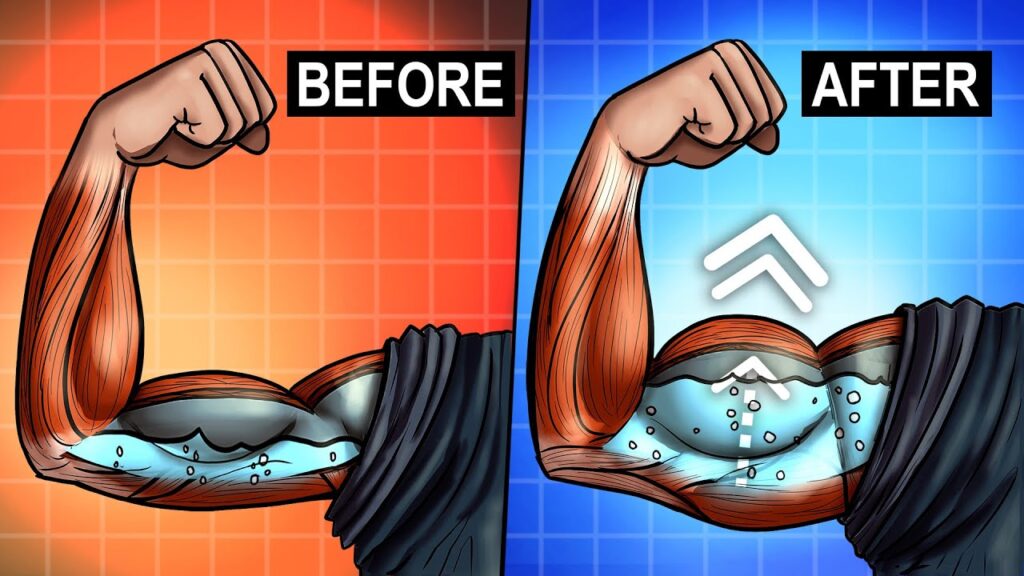
A: Creatine causes intracellular water retention — meaning water is drawn into muscle cells, not stored under the skin. This makes muscles appear slightly larger and fuller from day one, which is a benefit rather than a cosmetic problem. Any initial weight gain of 1 to 2kg is intramuscular water, not fat or subcutaneous puffiness.
Q: When is the optimal time to take creatine and protein?
A: Protein timing: immediately post-workout for optimal muscle protein synthesis response, or throughout the day distributed across meals to hit your daily total target. Creatine timing: largely irrelevant to effectiveness — the research consistently shows that total daily intake matters far more than when you take it. Post-workout is a popular and practical choice because insulin sensitivity is elevated, which may marginally improve creatine uptake into muscle cells.
Enjoyed this article? Explore more expert guides at mensbuddy.com — your complete resource for men’s health, fitness, grooming, and lifestyle.